Can You Use a Generator in an Apartment? What to Know Before an Outage
If you live in an apartment, backup power is harder than it looks. A gas or propane generator may seem like the obvious answer during an outage, but apartment buildings come with extra limits: lease terms, shared walls, balconies, noise rules, fire codes, and restricted storage space.
That is why the real question is usually not just can you use a generator in an apartment, but whether you can do it legally and safely. In many cases, the answer for traditional fuel-burning generators is no, or only under very narrow conditions that still may not work for renters.
The good news is that apartment residents still have practical backup power options. Battery-based systems such as portable power stations, sometimes marketed as solar generators, can cover small but important needs like phones, lights, internet equipment, and in some cases a refrigerator. The key is understanding the limits, checking your building rules, and choosing a setup that matches your actual outage needs rather than assuming any backup device can power everything.
Legal and Safety Challenges of Traditional Generators in Apartments
Traditional generators are often a bad match for apartment living because they create problems on several fronts at once: exhaust fumes, fire risk, noise, and placement.
A fuel-burning generator needs outdoor operation with plenty of clearance. That is difficult in most apartment settings. Balconies, breezeways, parking structures, and areas near doors or windows may not meet safety guidance or building rules. Even if a generator is technically outdoors, exhaust can still drift into nearby units.
The biggest safety issue is carbon monoxide. Fuel-burning generators should not be used indoors, in hallways, in garages attached to living spaces, or in enclosed or partially enclosed areas. Apartment layouts make safe placement especially hard because neighbors are close and airflow can be limited.
Leases and condo or HOA rules often add another barrier. Many buildings restrict or ban:
- Gasoline or propane storage inside units
- Fuel-burning equipment on balconies or patios
- Noisy equipment that disturbs neighbors
- Temporary equipment in shared walkways or exits
Local regulations for apartment generators can also matter. Fire codes may limit where fuel can be stored. Building management may prohibit equipment that creates a fire hazard or blocks egress. Some cities or apartment communities have their own rules on combustible fuels, outdoor equipment, and nuisance noise.
Before buying anything, check these sources in order:
- Your lease or rental agreement
- Building or HOA rules
- Landlord or property manager guidance in writing
- Local fire department or authority having jurisdiction
If any of those sources say no, that answer matters more than a marketing claim. Even where a portable generator is not explicitly named, rules on fuel storage, open-air equipment, and balcony use may still make it impractical.
For most renters, this is the bottom line: a traditional generator may be common for single-family homes, but apartment living usually changes the safety and legal equation.
Safety of Indoor-Use Power Stations for Apartment Residents
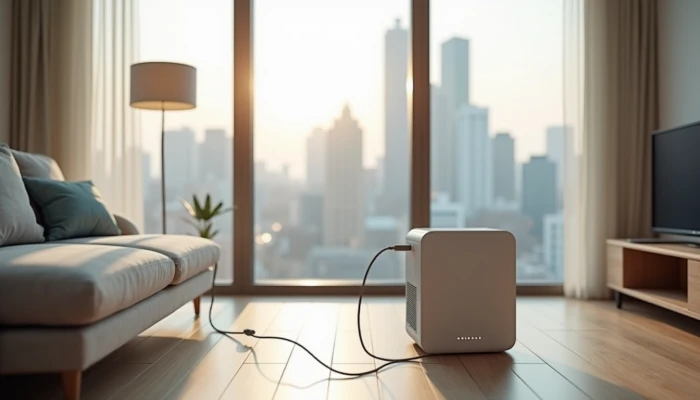
Battery-based portable power stations are different from traditional generators because they do not burn fuel during use. That means no exhaust fumes and no carbon monoxide from operation, which is why many manufacturers and safety guides describe them as suitable for indoor use when used as directed.
That does not mean every setup is automatically safe. Indoor use still depends on following the manufacturer instructions and basic common-sense precautions.
Safety of indoor power stations usually comes down to a few factors:
- Stable placement on a hard, flat surface
- Space around the unit for airflow
- Keeping it away from heat sources and flammable materials
- Using the correct charger and cables
- Avoiding damaged batteries, damaged cords, or overloaded outlets
Many better-designed units include features that reduce risk, such as a battery management system, temperature monitoring, short-circuit protection, and pure sine wave AC output for sensitive electronics. If you are comparing options, those features are worth looking for because they help the unit manage charging, discharging, and connected devices more predictably.
A few apartment-specific habits can also help:
- Do not place the unit behind a refrigerator where heat can build up.
- Do not charge it in a tight closet or near bedding, curtains, or paper clutter.
- Keep vents clear.
- Keep children and pets from tampering with cables or outlets.
- Unplug and stop using the unit if it becomes damaged, swollen, unusually hot, or gives off an unusual smell.
Here is a simple indoor-use checklist.
| Check | Why it matters |
|---|---|
| Manufacturer says indoor use is allowed | Confirms intended use |
| Unit is on a stable, non-soft surface | Helps with cooling and prevents tipping |
| Vents are unobstructed | Reduces heat buildup |
| Cords and plugs are undamaged | Lowers electrical risk |
| No flammable items nearby | Reduces fire risk |
| Load stays within rated output | Helps avoid shutdowns or overload |
If you are wondering, how much battery backup do I need, start with the devices you truly care about during a short outage. In an apartment, that often means phones, lights, Wi-Fi, laptops, and maybe a small kitchen appliance or refrigerator. A battery unit can be a practical part of home battery backup planning, but only if the total wattage and runtime match your needs.
The main tradeoff is capacity. Indoor-use power stations are often safer and more rental-friendly than fuel generators, but they store a limited amount of energy. That makes them useful for essential loads, not a promise of whole-apartment backup.
Practical Alternatives to Traditional Generators for Apartments
If a traditional generator is off the table, the best alternative is usually a battery-based backup setup sized around your most important loads.
For apartment residents, the most practical options often include:
- Portable power stations for plug-in backup power
- Small uninterruptible power supplies for internet gear or desktop equipment
- Rechargeable lighting and device power banks for short outages
- Battery systems that do not require permanent installation or fuel storage
Portable power stations are the most flexible option for many renters because they are movable, quiet, and do not require changes to the building electrical system. Some can be recharged from a wall outlet, a car, or portable solar panels if allowed by your building and used according to manufacturer guidance.
A simple way to think about sizing is to separate must-run items from nice-to-have items.
Must-run items might include:
- Phone charging
- A lamp or LED lights
- Wi-Fi modem and router
- Laptop
- CPAP only if the device manufacturer and your clinician guidance support your backup plan
Nice-to-have items might include:
- TV
- Coffee maker
- Microwave
- Fan
- Mini fridge or refrigerator
If your goal includes a fridge, pay close attention to startup surge and runtime. A battery backup for refrigerator use usually needs more capacity than people expect, especially if you also want to run lights and internet equipment at the same time. This is where a home battery size calculator can help, even a simple one based on watts and hours.
Use this quick planning framework.
- List the devices you want to run.
- Find each device's running watts.
- Note any startup surge for motors, such as a fridge.
- Estimate how many hours you need.
- Compare that total to the power station's output and usable energy.
This comparison can help narrow the right type of backup option.
| Option | Apartment-friendly? | Main strengths | Main limits |
|---|---|---|---|
| Gas or propane generator | Often no | Longer runtime with fuel | Exhaust, noise, fuel storage, lease and code issues |
| Portable power station | Often yes | Quiet, no operating emissions, no permanent install | Limited runtime and output |
| Small UPS | Yes | Keeps internet or electronics running briefly | Very limited capacity |
| Building-provided backup | Depends on building | No personal setup needed | Usually powers only common areas or select systems |
For many renters, a portable power station in the rough range often discussed for apartments can cover a few essentials during short outages, but results depend on the actual load. A larger unit may help with a refrigerator or freezer for part of an outage, while a smaller one may be better suited to communications, lighting, and charging.
That is why alternatives to traditional generators work best when you are realistic about priorities. In apartment settings, backup power is usually about preserving essentials and comfort, not recreating full normal power use.
If you later move into a house, your options may expand to larger home energy storage or whole-home systems. But for renters today, a compact battery-based setup is often the most practical path.
Conclusion
For apartment residents, traditional generators are usually limited by more than convenience. Lease restrictions, fire code concerns, fuel storage rules, noise, and carbon monoxide risk can all make them a poor fit.
That does not mean you are out of options. Battery-based backup systems, including portable power stations, can offer a safer and more practical way to keep a few essentials running during an outage. They are especially useful when you want backup power without fuel, permanent installation, or conflict with building rules.
The most important step is to verify your setup before you need it.
- Review your lease
- Ask your landlord or property manager
- Check local fire and building rules
- Confirm manufacturer guidance for indoor use
- Size the unit around your actual essential loads
That approach will not give you , but it can give you a clearer, safer plan for outages. For many renters, that is the most useful form of home battery backup: not whole-home coverage, but reliable support for the devices that matter most.