How to Get More Value from a Home Battery During Peak Rate Hours
A home battery can do more than sit idle and wait for an outage. In many homes, it can also help cover electricity use during the most expensive parts of the day. The challenge is knowing when to charge it, when to use it, and which loads should get priority.
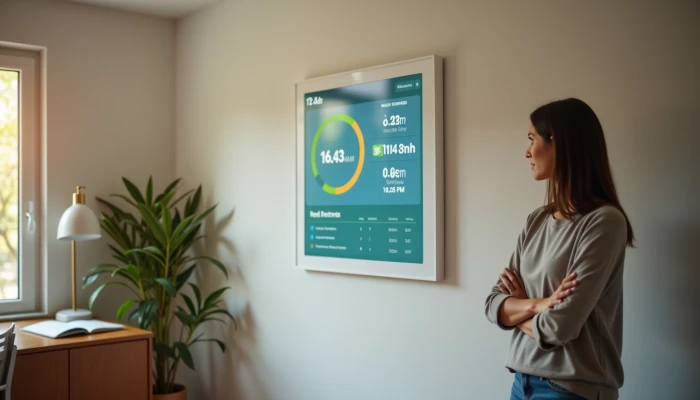
That is where an energy monitor becomes useful. Instead of guessing, you can see how power moves through your home in real time: from solar panels to the battery, from the grid to your appliances, and from the battery back into your household loads. That visibility makes it easier to line up battery use with peak electricity rates, solar production timing, and your actual daily habits.
For homeowners exploring home energy storage, the goal is not to chase perfect optimization. It is to make better decisions with clearer data. A monitoring system can help you spot waste, set a more realistic backup reserve, and decide whether your current battery setup matches your needs.
It can also answer practical questions people often ask, such as whether they need a larger battery, whether a critical loads strategy makes more sense than whole-home backup, or whether a simple home battery size calculator is giving a realistic estimate. Monitoring does not replace professional system design, but it gives you a much better starting point for those conversations.
Understanding Energy Flow with Monitoring Tools
The first step in optimizing a battery is understanding energy flow analysis. That means tracking where electricity is coming from, where it is going, and when those movements happen.
Most monitoring platforms focus on four basic flows:
- Solar production
- Household consumption
- Battery charge and discharge
- Grid import and export
When you can see those flows together, patterns become easier to spot. For example, you may notice that your solar array regularly produces extra power at midday, but your battery is already full by then. Or you may find that evening cooking, air conditioning, or EV charging is pulling expensive grid power even though your battery still has usable capacity.
Real-time data helps with in-the-moment decisions, but historical data is often more valuable. Looking back over days or weeks can show whether your battery is being underused, drained too early, or reserved too conservatively. Some implementation guidance also emphasizes using load profiles to understand which circuits or appliances create the biggest spikes.
That matters because not all electricity use is equal. A refrigerator, internet equipment, and a few lights create a very different battery demand than electric resistance heating, central air, or large EV charging sessions. Monitoring helps separate your essential loads from your high-demand loads.
A simple way to review your energy flow is to check these questions:
- When does my home use the most electricity?
- When does my solar system produce the most electricity?
- Is my battery usually full, half full, or nearly empty before peak rates start?
- Which appliances cause the largest demand spikes?
- How often am I importing from the grid during expensive hours?
Some systems also connect with smart devices or load controls. That can allow certain loads to be delayed, reduced, or prioritized based on battery status and utility pricing. The exact features vary, so compatibility should always be verified with your installer or manufacturer.
If you are also wondering, how much battery backup do I need, monitoring data gives a more grounded answer than a rough online estimate alone. A home battery size calculator may provide a starting point, but your actual usage profile is what reveals whether your battery is sized for outage resilience, bill management, or both.
Peak Shaving Strategies with Battery Optimization
Once you understand your energy flow, the next step is using the battery for peak shaving strategies. Peak shaving means reducing how much electricity you pull from the grid during the highest-cost or highest-demand periods.
In practical terms, that often means charging the battery when power is cheaper or when solar production is strong, then discharging it later when utility rates rise. Many battery management systems are designed to support this kind of scheduled or automated behavior, especially in homes with time-of-use pricing.
The key is timing. If the battery discharges too early, you may still end up buying expensive grid power later in the evening. If it stays too full for too long, you may miss the chance to avoid those peak charges. Monitoring helps you fine-tune that balance.
A useful review process looks like this:
- Identify your utility's peak, mid-peak, and off-peak windows.
- Compare those windows with your home's highest usage periods.
- Check whether your battery typically enters peak hours with enough charge.
- Review which loads are worth shifting to lower-cost periods.
- Adjust battery reserve settings or automation rules with professional guidance if needed.
This is also where alerts can help. Some monitoring systems can notify you when battery charge is lower than expected before peak hours, or when grid imports rise above your normal pattern. Those alerts do not optimize the system by themselves, but they can reveal when settings or habits need attention.
Load shifting is another important part of peak shaving. Instead of asking the battery to cover everything, you may get better results by moving flexible loads outside the expensive window.
Common candidates include:
- EV charging
- Laundry
- Dishwashers
- Water heating, if controllable
- Other non-urgent high-draw appliances
That approach can reduce strain on the battery and preserve stored energy for loads that matter more in the evening.
Use this table to decide what to review first.
| Monitoring finding | What it may mean | Practical next step |
|---|---|---|
| Battery is empty before peak rates end | Discharge starts too early or loads are too high | Review discharge schedule and major evening loads |
| Battery stays mostly full during peak hours | Stored energy is not being used effectively | Check operating mode and utility rate settings |
| Grid imports spike at the same time each day | A recurring appliance or routine is driving demand | Identify the load and see if it can be shifted |
| Off-peak charging is low even when rates are cheaper | Charging window may be too short or settings may be conservative | Review charging rules with installer or manufacturer guidance |
| Battery covers small loads but not larger evening demand | System may be sized for critical loads rather than broad load shifting | Reassess expectations and backup priorities |
The goal is not to eliminate grid use entirely. It is to reduce unnecessary grid dependence when rates are highest, while keeping enough battery capacity for your priorities.
Aligning Battery Usage with Solar Production Cycles
Battery optimization works better when it follows solar production timing. Solar output usually rises in the morning, peaks around midday, and falls later in the afternoon, but the exact curve depends on season, weather, roof orientation, and shading.
Monitoring helps you compare that production curve with your household demand. In many homes, the mismatch is obvious: solar production is strongest when people are away or using less power, while electricity use rises in the late afternoon and evening when solar output drops. A battery helps bridge that gap, but only if it is charged at the right time and reserved for the right hours.
This is where historical monitoring data becomes especially useful. Over time, you can see whether your battery is regularly filling too early, failing to fill on cloudy days, or charging from the grid more often than expected. You can also see seasonal differences. A setup that works well in summer may behave differently in winter because both solar generation and household loads change.
A practical way to align battery use with solar cycles is to review three daily windows:
- Morning: Is the battery still carrying overnight loads when solar starts producing?
- Midday: Is excess solar available to charge the battery, or is it being exported before the battery is full?
- Evening: Does the battery have enough stored energy to cover the loads you care about most?
If those windows do not line up well, the issue may not be the battery alone. It could be your appliance timing, your reserve setting, your rate plan, or the difference between your expected and actual solar output.
For example, if your battery is full by early afternoon and your home exports a lot of solar after that, you may want to ask whether a different operating mode would better support late-day usage. If the battery rarely reaches full charge, your home may be using more daytime energy than expected, or solar production may be lower than your estimate suggested.
Monitoring can also support simple behavior changes that improve self-consumption without overcomplicating the system.
Examples include:
- Running flexible appliances when solar output is strongest
- Avoiding unnecessary high loads just before peak rates begin
- Scheduling EV charging around either surplus solar or lower utility rates
- Preserving battery charge for evening critical loads when storms or outages are more likely
These are not universal rules. They depend on your utility pricing, battery controls, and household routines. But the larger point is consistent: when you can see the relationship between solar production, battery state of charge, and home demand, your decisions become more precise.
That is one of the main advantages of pairing monitoring with home energy storage. The battery stops being a black box and becomes part of a visible, manageable energy system.
Conclusion
A battery becomes more useful when you can see how it behaves across the day. Energy monitoring turns home energy storage from passive backup into an active planning tool. It helps you understand energy flow analysis, refine peak shaving strategies, and match battery operation to solar production timing instead of relying on guesswork.
That does not mean monitoring alone guarantees the best outcome. Battery settings, inverter behavior, utility rate structures, backup reserve choices, and household load patterns all affect results. But with good data, you can ask better questions and make more realistic adjustments.
If your monitoring shows repeated mismatches between solar generation, battery charge, and peak-hour usage, it may be worth discussing configuration changes with a qualified installer or electrician. That is especially important if you are reviewing critical loads, changing operating modes, or trying to decide whether your current battery capacity fits your actual needs.
In short, the value of monitoring is clarity. It helps you use the battery you already have more intentionally and plan future upgrades with fewer surprises.