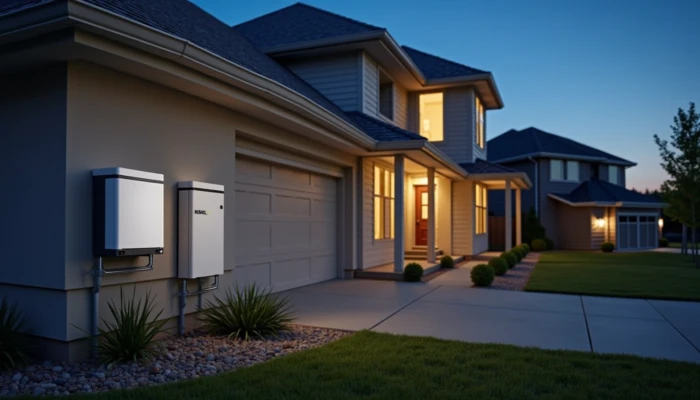
Battery Backup or Generator? How to Choose for Outages at Home
When the power goes out, many households end up comparing two very different backup options: a whole-house battery system or a generator. Both can keep important equipment running, but they solve the problem in different ways.
The hard part is that the decision is not just about whether the lights turn back on. It is also about how much noise you can tolerate, how much upkeep you want, what fuel access looks like during an outage, and whether you want a system that can do more than emergency backup.
This guide compares the two in plain language so you can narrow down which approach fits your home. It also highlights an important reality: many homes do better with a critical load backup plan than with a system designed to power every circuit all at once.
Understanding Whole House Battery Backup and Generator Systems
A whole-house battery backup system stores electricity and then sends it back into selected home circuits during an outage. That stored energy may come from the grid, from solar panels, or from both, depending on the setup. A generator works differently: it creates electricity on demand by running an engine, usually fueled by natural gas, propane, gasoline, or diesel.
That difference affects nearly everything else, including noise, maintenance, fuel planning, and daily usefulness. A home battery backup system can sometimes help with time-of-use rates or solar self-consumption even when the grid is working. A generator is usually an outage-only tool.
It also helps to separate whole-home backup from critical load backup.
- Whole-home backup aims to support most or all household circuits, though actual performance still depends on the battery's power output and stored energy.
- Critical load backup focuses on essentials such as refrigeration, lights, internet, medical support equipment, a furnace blower, or a well pump.
In practice, many households asking "how much battery backup do I need" find that the answer starts with essential loads, not the entire panel. Guidance on critical loads commonly emphasizes choosing what truly needs to stay on first. That can keep the system smaller, more affordable, and more realistic for outage use.
If you are comparing options, start with this question: do you want to power the whole house, or do you mainly want to cover the circuits that matter most during an outage?
Noise Levels: Quiet Operation vs. Audible Power
Noise is one of the clearest day-to-day differences between these systems.
Battery systems are generally very quiet in operation. During an outage, they do not need an engine to start, and they do not create the steady mechanical sound people usually associate with backup power. You may hear minor fan noise from some equipment, but the experience is much closer to silence than to a running machine.
Generators are different. Portable and standby models both create noticeable sound because they rely on an engine. Even when the noise level is acceptable, it is still present outdoors and often noticeable to nearby rooms or neighbors. In dense neighborhoods, that can be a quality-of-life issue during long outages.
This matters more than many buyers expect.
- If outages often happen at night, quiet operation may be a major comfort advantage.
- If you work from home, battery backup can be less disruptive for calls, sleep, and general household routine.
- If you live close to neighbors, generator noise may affect placement and local acceptance.
A simple way to think about it is this: batteries tend to disappear into the background, while generators announce that they are running. For some households, that is a small tradeoff. For others, it becomes a deciding factor.
Maintenance Requirements: Low-Effort vs. Routine Care
Battery systems usually ask less from the homeowner after installation. They do not need oil changes, they do not require on-site fuel storage, and they do not have the same kind of engine wear that generators do. In many cases, maintenance is mostly about monitoring system health, software alerts, and manufacturer-recommended inspections.
Generators require more routine attention because they are engine-based machines. Depending on the model and fuel type, maintenance may include oil and filter changes, test runs, fuel checks, and periodic servicing of engine components. If maintenance is skipped, reliability during an outage can suffer.
That does not mean batteries are maintenance-free in an absolute sense. It means the maintenance burden is usually lower.
Use this quick comparison to frame the difference.
| Factor | Whole-house battery | Generator |
|---|---|---|
| Moving parts | Few or none in the battery unit itself | Engine-based system with more wear points |
| Fuel handling | No fuel refilling or storage for the battery itself | Ongoing fuel planning or utility fuel dependence |
| Routine service | Mostly monitoring and scheduled checks | Regular engine service and inspection |
| Outage readiness | Often automatic if charged and configured | Depends heavily on maintenance and fuel availability |
Lifespan discussions also need context. Some sources describe battery systems in the roughly 10 to 15 year range, while generators may remain in service longer but with ongoing maintenance and part replacement. That does not automatically make one better. It means the ownership experience is different.
If you want a lower-effort system, batteries usually have the edge. If you are comfortable maintaining mechanical equipment, a generator may still be a practical fit.
Environmental Impact: Emissions and Sustainability
From an operating-emissions standpoint, batteries and generators are not equivalent.
Battery backup systems do not produce on-site exhaust emissions while discharging during an outage. If paired with solar, they can also store renewable electricity for later use. That makes them appealing for households trying to reduce local air pollution, fuel handling, and engine exhaust around the home.
Generators burn fuel to make electricity, so they produce emissions during operation. The exact amount depends on fuel type, generator size, runtime, and load. They can also add local air quality concerns, especially during extended outages or in tightly spaced residential areas.
That said, environmental comparisons should stay grounded.
- Batteries still have manufacturing impacts.
- Their overall footprint depends partly on how the electricity used to charge them is generated.
- Recycling and end-of-life handling vary by manufacturer, chemistry, and local programs.
For most homeowners, the practical takeaway is simpler: batteries are cleaner at the point of use, while generators rely on combustion every time they run. If environmental impact is high on your priority list, that usually pushes the decision toward battery backup rather than a fuel-based generator.
Cost-Effectiveness: Upfront Investment vs. Long-Term Savings
Cost is where the tradeoff often gets real. Battery systems usually cost more upfront, especially if you want enough stored energy and power output to support many circuits. Generators often cost less to buy initially, but they bring ongoing fuel and maintenance costs that batteries usually avoid.
That means the cheaper option at purchase is not always the lower-cost option over time. But it also does not mean batteries automatically save money. The answer depends on outage frequency, fuel prices, battery size, whether solar is included, and whether the battery is used for more than backup.
A practical comparison looks like this.
| Cost question | Battery backup | Generator |
|---|---|---|
| Upfront equipment cost | Usually higher | Usually lower |
| Operating cost during outages | No fuel cost, but stored energy must be available | Ongoing fuel cost |
| Maintenance cost | Usually lower | Usually higher |
| Extra value outside outages | May help with solar storage or time-of-use shifting | Usually limited |
If you are trying to estimate value over a long ownership period, include these line items:
- Purchase and installation cost
- Fuel cost over expected outage hours
- Routine maintenance and service visits
- Possible battery replacement timing or generator part replacement
- Whether the system provides useful daily value outside emergencies
This is also where the question "generator vs battery backup" often turns into a sizing question. A very large battery system can become expensive quickly if the goal is to run central air, electric resistance heat, or other heavy loads for long periods. A smaller critical-load battery system may be more cost-effective than trying to imitate unlimited generator runtime.
If you want a rough decision shortcut, use this framework.
- Choose battery-first if you value quiet operation, low maintenance, and possible everyday use with solar or rate management.
- Choose generator-first if your budget is tighter upfront and you need longer runtime as long as fuel is available.
- Consider a critical-load battery plan if whole-home battery pricing feels too high but you still want silent backup for essentials.
For exact numbers, a local installer or electrician can help you compare system sizing, outage goals, and fuel assumptions. That is usually more useful than relying on a generic home battery size calculator alone.
Conclusion
There is no universal winner between a whole-house battery and a generator. The better choice depends on what kind of outages you expect, what you want to keep running, how much upkeep you are willing to handle, and how much the upfront budget matters.
Batteries are usually stronger on quiet operation, lower maintenance, and cleaner on-site operation. Generators are often easier to justify on initial cost and can provide longer backup as long as fuel is available. For many households, the smartest middle ground is not "power everything" but a well-planned critical-load setup that keeps the most important circuits running.
Before you buy, make a short list of essential loads, estimate how long you want backup to last, and ask qualified professionals to review panel configuration, load limits, fuel access, and local code requirements. That step will give you a more realistic answer than marketing claims alone.