Can an Older Electrical Panel Support a Home Battery System?
Adding a home battery backup system to an older house can feel uncertain. You may be wondering whether your panel can handle it, whether a battery can connect without a full replacement, or whether the project will trigger bigger electrical upgrades than you expected.
The good news is that an older panel does not automatically rule out battery storage. But compatibility is never something to assume. It depends on the panel's rating, available space, breaker compatibility, the way the battery system connects, and local code and utility requirements.
This guide walks through a safe, practical evaluation process. It focuses on what you can check as a homeowner, where retrofit-friendly options such as AC-coupled systems may help, and why licensed electricians are essential before any final decisions are made.
Step 1: Check Your Electrical Panel Specifications
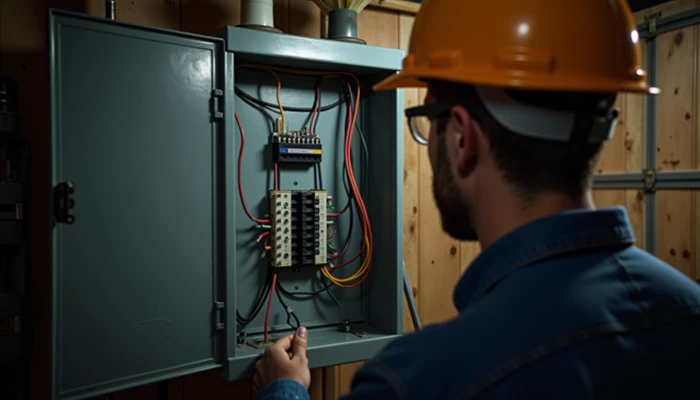
Start with the panel you already have. Before discussing battery size, backup goals, or installer quotes, confirm the basic facts about your electrical service and panel.
Look for the panel label and note these details:
- Manufacturer and model
- Main breaker rating, often 100A or 200A
- Approximate age or manufacturing date
- Number of open breaker spaces
- Whether the panel uses standard or tandem breakers
- Any signs of corrosion, overheating, missing labels, or past modifications
These details matter because battery systems usually need dedicated breakers, disconnects, and other equipment that must fit within the panel's design and listing. If the panel is already crowded, uses unusual breaker types, or has a history of add-on work, integration may be more complicated.
A quick homeowner review can help you prepare for an installer visit, but it does not replace a professional assessment. In older homes, the issue is often not just age. It may be limited busbar capacity, incompatible breaker arrangements, or a panel brand with a poor service reputation.
Use this simple checklist before requesting quotes:
- Take a clear photo of the panel exterior
- Take a clear photo of the label inside the door
- Count open breaker spaces
- Note the service size shown on the main breaker
- Write down major loads such as central air, electric range, well pump, EV charger, or electric water heater
- Note whether you already have solar
- Note whether you want whole-home backup or only critical loads
If your main goal is outage protection for a few essentials, that can affect the system design. For example, someone asking how much battery backup do I need for a refrigerator, lights, internet, and a few outlets may not need the same setup as a household trying to back up large HVAC loads.
Here is a quick way to think about what you are checking:
| What to check | Why it matters |
|---|---|
| Main breaker rating | Helps determine overall service capacity and possible interconnection limits |
| Open breaker spaces | Battery equipment often needs dedicated spaces |
| Breaker type | Some older panels have compatibility limits or listing concerns |
| Panel condition | Damage or age-related wear may push the project toward upgrades |
| Existing large loads | Affects whether whole-home backup is realistic or if critical loads make more sense |
This first step does not tell you whether the project is approved. It tells you whether your panel looks straightforward, constrained, or likely to need closer review.
Step 2: Understand AC-Coupled System Benefits for Retrofitting
If your home has an older panel, one of the most useful concepts to understand is the AC-coupled battery system.
In plain terms, AC-coupled systems connect on the AC side of the home electrical system rather than requiring direct DC integration with the solar array. That can make them more practical for retrofits, especially when a home already has solar or when the goal is to add storage without rebuilding the entire system architecture.
Common retrofit guidance emphasizes a few AC-coupled advantages:
- They are often easier to add to an existing solar setup
- They connect through the home's electrical distribution rather than requiring a full redesign of the solar array wiring
- They can be a practical path when homeowners want backup capability without immediately replacing all existing equipment
That does not mean AC-coupled systems are universally compatible with every older panel. The panel still has to support the connection method, overcurrent protection, and any required disconnects. Utility interconnection rules also still apply.
What AC-coupled systems may do is reduce the number of changes needed compared with more invasive retrofit paths. For some homes, that can mean preserving more of the existing setup while still adding battery backup for selected loads.
This matters if your goal is resilience rather than maximum backup. For example, if you mainly want battery backup for refrigerator operation, lights, communications, and a few circuits during outages, an AC-coupled design paired with a critical loads approach may be easier to fit into an older home than a whole-home design.
A practical way to compare backup goals is this:
| Backup goal | What it often means for an older panel |
|---|---|
| A few essential circuits | May be easier to retrofit with a critical loads design |
| Existing solar plus battery | AC-coupled options may simplify retrofit planning |
| Whole-home backup | More likely to require detailed load review and possible panel or service upgrades |
| Large motor loads and electric heating | May create design limits even if a battery can be installed |
If you are still early in planning, avoid jumping straight to battery capacity. A home battery size calculator can help estimate energy needs later, but panel compatibility and connection method come first. A battery that looks right on paper still has to fit safely into the home's electrical infrastructure.
Step 3: Consult Licensed Electricians for Safety and Code Compliance
This is the step that protects you from expensive assumptions.
A licensed electrician, ideally one familiar with battery backup and interconnection work, can determine whether your panel can accept the new equipment as-is, whether a subpanel or critical loads panel makes more sense, or whether a service or panel upgrade is the safer path.
That evaluation typically includes:
- Reviewing the panel rating and condition
- Checking breaker compatibility and available spaces
- Confirming overcurrent protection and disconnect requirements
- Reviewing how the battery inverter would connect
- Determining whether a critical loads panel is appropriate
- Checking permit and inspection requirements
- Confirming utility interconnection rules
This is especially important in older homes because visible panel age is only part of the story. A panel may look usable but still have listing limitations, capacity constraints, or prior modifications that complicate battery integration.
Professional review also matters because battery systems intersect with code requirements that homeowners should not try to interpret on their own. Installation guidance commonly references NEC Articles 690 and 705 for solar and interconnected power systems, along with local amendments and utility-specific rules. Those details can affect breaker placement, disconnects, load-side connections, and whether certain configurations are allowed at all.
When speaking with electricians or installers, ask practical questions such as:
- Have you installed battery backup systems on older homes before?
- Will you evaluate the existing panel before proposing battery size?
- Do you expect a critical loads panel, main panel changes, or a full upgrade?
- How will you verify breaker compatibility and panel listing requirements?
- Will you handle permits and utility coordination?
A useful rule of thumb is simple: if the project involves hardwired backup equipment, panel connections, or transfer equipment, it needs qualified design and installation. This is not a DIY decision area, even if your backup goals seem modest.
Step 4: Retrofitting Considerations for Older Panels
Once compatibility looks possible, the next question is how to retrofit the system with the fewest surprises.
In many homes, the answer is not just "Can I add a battery?" but "What supporting changes are needed to do it safely and cleanly?" Older panels often need careful layout planning, especially when space is limited or when the backup design includes only selected circuits.
Implementation guidance commonly highlights these retrofit considerations:
- Place the battery inverter close to the electrical panel when practical to reduce voltage drop and simplify conductor runs
- Use matched breakers where required to preserve the panel's listing and avoid compatibility problems
- Confirm utility interconnection requirements before final design decisions are made
- Plan for disconnects, overcurrent protection, and any required backup load segregation
For some homes, a retrofit may involve a critical loads panel rather than trying to back up every circuit. That can be a sensible middle ground when the existing panel is older, the service size is limited, or the homeowner wants to control costs while still protecting essentials.
Here is a simple decision framework to discuss with a professional:
| Situation | Possible retrofit direction |
|---|---|
| Panel is in good condition with adequate space | Battery integration may be straightforward, subject to code and utility review |
| Panel is crowded but otherwise serviceable | A critical loads panel or related reconfiguration may help |
| Breaker compatibility is uncertain | Further evaluation is needed before any equipment is selected |
| Panel shows age, damage, or questionable modifications | Upgrade discussions may be necessary before battery installation |
| Utility has strict interconnection limits | System design may need adjustment even if the panel itself is usable |
This is also the stage where expectations should stay realistic. An older panel may support a battery project, but not always the exact version you first imagined. A home that cannot easily support whole-home backup may still support a smaller home battery backup setup focused on outage essentials.
That is often a better outcome than oversizing the project or forcing a design that does not fit the home's electrical limits. The goal is not to avoid every upgrade at all costs. The goal is to make informed choices about what is necessary, what is optional, and what backup level your home can support safely.
Conclusion
Older electrical panels can sometimes work with modern battery systems, but compatibility depends on the panel's specifications, the connection method, and a professional review of safety and code requirements.
The practical path is to start with the panel basics, understand why AC-coupled systems are often helpful in retrofit situations, and bring in licensed electricians early. That process can reveal whether your home is a good candidate for a straightforward installation, a critical-loads-focused design, or a panel upgrade before battery storage makes sense.
If you are comparing options, keep the decision grounded in your real backup goals. A smaller system for essentials may fit an older home more easily than a whole-home design. Either way, careful evaluation is what turns battery backup from a vague idea into a safer, more workable plan.