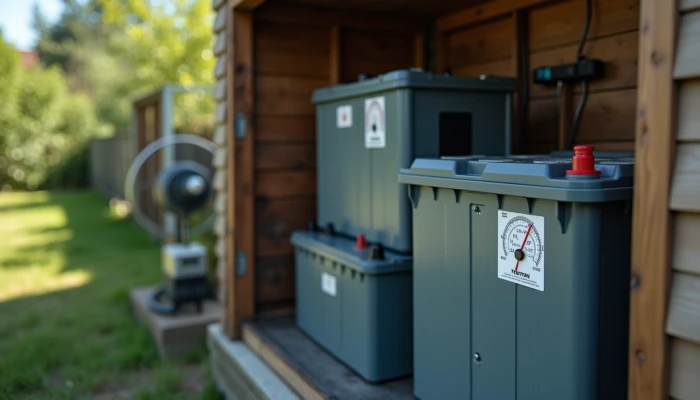
Will a Home Battery Hold Up in Desert Heat?
If you live where summer heat lingers for months, it is reasonable to wonder whether a home battery backup system can handle it. High temperatures can affect battery performance, charging behavior, and long-term wear. They can also influence where a battery can be installed and what kind of thermal management the system needs.
The good news is that home batteries are not all equally vulnerable to heat, and desert conditions do not automatically make them a bad option. What matters most is whether the battery is rated for the temperatures it may actually face, how the system manages heat, and whether the installation location helps or hurts those protections.
This guide walks through the practical questions to ask before you buy. It focuses on manufacturer temperature specifications, active cooling systems, and installation location considerations so you can evaluate options more confidently before talking with an installer.
Understanding Battery Temperature Specifications
The first place to start is the manufacturer spec sheet. Marketing language may say a battery is suitable for harsh weather, but the spec sheet is where you will usually find the actual operating, charging, and storage temperature ranges.
For lithium-ion batteries used in stationary storage, published thermal management references commonly describe a broad safe operating range around -20°C to 60°C. That does not mean a battery performs the same way across that full range. It means the system may be designed to function safely within those limits under defined conditions.
In hot climates, the more useful question is not just "What is the maximum temperature?" It is also:
- What is the maximum ambient temperature for operation?
- Is the charging temperature range different from the discharge range?
- Does the manufacturer require shaded or indoor placement for warranty coverage?
- Are there derating notes, meaning reduced performance at higher temperatures?
- Is there a separate recommended storage temperature range?
Those details matter because batteries can respond differently to heat depending on whether they are charging, discharging, or simply sitting idle.
LFP, or lithium iron phosphate battery, chemistry is often discussed as a better fit for hot conditions because it is generally more thermally stable than some other lithium chemistries. That does not mean every LFP system is automatically suitable for every desert climate. The battery management system, enclosure design, inverter integration, and installation environment still matter.
A practical way to compare systems is to review the spec sheet in three layers.
| Spec to check | Why it matters in desert heat |
|---|---|
| Operating temperature | Shows the ambient range where the battery is intended to run |
| Charging temperature | Helps you understand whether hot afternoons may limit charging behavior |
| Storage temperature | Important if the battery may sit unused during part of the year |
| Warranty conditions | May include location, ventilation, or temperature-related requirements |
| Chemistry type | Can affect thermal stability and heat tolerance |
This is also where sizing questions connect to heat. If you are asking how much battery backup do I need, remember that hotter homes often have larger cooling loads. A battery sized only around average daily use may not cover what you expect during a summer outage. A simple home battery size calculator can help estimate energy needs, but in hot climates you should also think about when those loads occur and whether the battery may be operating during the hottest part of the day.
In short, desert heat is not just a battery question. It is a battery-plus-load question. A system that looks large enough on paper may feel smaller during heat waves if you expect it to support air conditioning or other heavy loads for long periods.
Thermal Management and Cooling Systems
Once you know the battery's temperature limits, the next question is how the system stays within them. This is where thermal management becomes important.
Home batteries generate heat during charging and discharging. In a mild climate, that may be easier to manage. In a desert climate, the battery may start the day warm, sit in hot ambient air, and then add more internal heat during use. Without effective temperature control, that can increase stress on the system and may reduce performance or long-term durability.
Thermal management generally falls into two categories:
- Active cooling, such as fans, forced air, or liquid-based cooling loops
- Passive cooling, such as enclosure design, ventilation paths, spacing, and protection from solar gain
Active cooling systems can be especially helpful in very hot regions because they do more than rely on surrounding air. They can move heat away from battery cells and power electronics when ambient conditions are unfavorable. Some systems also use software controls and sensors to adjust charging or discharging behavior when temperatures rise.
Passive cooling can still play a useful role. In moderate hot climates, a well-designed enclosure in a shaded, ventilated location may be enough. But passive measures work best when the installation itself reduces heat exposure. If a battery is mounted where it gets direct afternoon sun or trapped hot air, passive design has less room to help.
Here are practical signs that a system may be better prepared for heat:
- The manufacturer clearly describes thermal management in product documentation
- The system includes temperature monitoring and battery management controls
- The installation instructions specify airflow clearances around the enclosure
- The product literature explains whether cooling is active, passive, or both
- The warranty language does not leave heat-related conditions vague
It also helps to ask installers how the battery and inverter handle sustained high temperatures. A battery may be rated for heat, but the full backup system includes electronics that also need protection.
A simple way to think about it is this:
| Cooling approach | What it can help with | Limits to keep in mind |
|---|---|---|
| Passive ventilation | Reduces trapped heat and supports airflow | Less effective if ambient air is already extremely hot |
| Shading and insulation | Lowers solar heat gain on the enclosure | Does not actively remove internally generated heat |
| Fan-based cooling | Improves heat removal during operation | May still depend on surrounding air temperature |
| Liquid cooling | Can manage heat more precisely in demanding conditions | Adds system complexity and varies by design |
None of these features make heat irrelevant. They simply improve the odds that the battery operates within its intended range.
For homeowners comparing quotes, a useful question is not just "Does this battery have cooling?" Ask instead, "How does this system manage heat during prolonged high outdoor temperatures, and what installation conditions does the manufacturer require?" That usually leads to a more meaningful answer.
Installation Location Considerations
Where the battery is installed can matter almost as much as the battery itself. A well-rated system can still face unnecessary stress if it is placed in a heat trap.
In desert climates, direct sun is one of the clearest problems to avoid. Outdoor walls, enclosed side yards, and poorly ventilated utility spaces can become much hotter than the reported air temperature. That extra heat can raise enclosure temperature and make the cooling system work harder.
In many homes, indoor or semi-protected spaces such as garages, utility rooms, or shaded covered areas offer better temperature control than fully exposed outdoor placement. That does not mean every indoor location is automatically suitable. Some garages get extremely hot in summer, and some utility rooms may have limited airflow. The right answer depends on actual site conditions and the manufacturer's installation rules.
When reviewing installation options, use this checklist.
- Is the battery protected from direct afternoon sun?
- Is there enough airflow around the enclosure?
- Could the space trap heat during long hot spells?
- Does the location stay within the manufacturer's temperature limits?
- Is the inverter or related equipment also protected from heat?
- Does the proposed location meet local code and clearance requirements?
- Has the installer explained why this location was chosen over other options?
This is also a good time to connect climate concerns with backup planning. If your goal is critical load backup, the battery may not need to support every circuit in the home. In very hot regions, prioritizing essential loads can reduce strain during outages. That might include refrigeration, communications, lighting, medical support equipment under manufacturer and professional guidance, or a limited cooling strategy rather than full-house air conditioning.
If you are still early in planning, think of installation location and sizing together.
- Estimate the loads you actually want backed up.
- Review whether those loads are likely during the hottest hours.
- Compare battery temperature ratings and cooling design.
- Ask where the system can be installed without excessive heat exposure.
- Confirm that the proposed setup meets local code and manufacturer requirements.
That process is more useful than treating battery size alone as the answer. Even a generous battery can be a poor fit if the installation location exposes it to unnecessary heat.
Finally, avoid treating online examples as universal guidance. Local building codes, fire safety rules, utility requirements, and manufacturer instructions can all affect placement. A qualified installer or electrician should confirm what is allowed and what makes sense for your specific home.
Conclusion
Home batteries can survive desert heat, but they do best when the system is chosen and installed with heat in mind from the start. The most important factors are the manufacturer's temperature specifications, the quality of the thermal management system, and an installation location that avoids direct sun and trapped heat.
If you are comparing options, focus on the spec sheet rather than broad claims. Check operating and charging temperature ranges, ask how the system cools itself, and make sure the proposed location supports those limits. Also remember that hot-climate backup planning is not only about battery chemistry. It is also about realistic load expectations during summer outages.
A careful, source-backed review now can help you avoid oversimplified promises later. For final decisions about placement, code compliance, and system design, verify details with the manufacturer and a qualified installer or electrician.