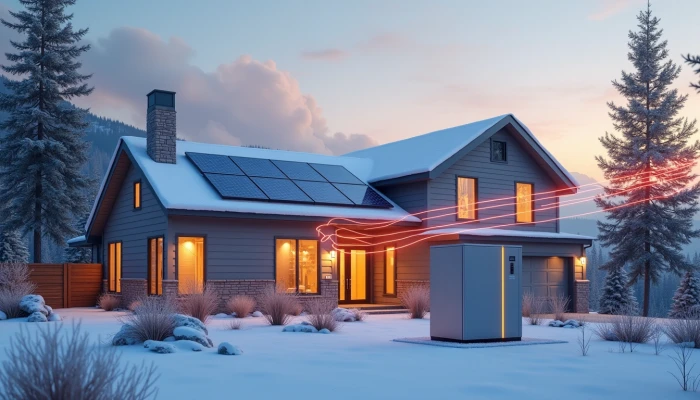
Choosing Safe Backup Power for Wildfire and Ice Storm Outages
Power outages during wildfires and ice storms create a different kind of planning problem than a short neighborhood blackout. You may face evacuation warnings, blocked roads, freezing temperatures, smoke, or several days without reliable utility power. In those conditions, backup power is less about convenience and more about keeping a few essential needs covered safely.
For many households, the challenge is not knowing whether a portable power station, a home battery backup system, or a solar-charged setup makes the most sense. Each option has tradeoffs. Some are easier to move and use right away. Others can switch on automatically and support more of the home. Some recharge from solar, but weather can limit how quickly that happens.
This guide explains the main clean backup power options in plain language, with a focus on safety considerations for extreme weather, system reliability in wildfires and ice storms, and how to estimate your real power needs before you buy or speak with an installer.
Understanding Backup Power Options for Extreme Weather
The three most common clean backup categories for households are portable power stations, home battery systems, and solar generators. They overlap, but they are not interchangeable.
Portable power stations are self-contained batteries with built-in outlets and an inverter. They are usually the simplest option for short outages or for powering a few devices in one room. They can often handle phones, lights, internet gear, small electronics, and in some cases a refrigerator for limited periods if the battery is large enough. The tradeoff is that they usually require manual setup and active power management.
Home battery systems are larger batteries connected to the home through professional installation. They can be set up to back up selected circuits or, in some homes, much more of the house. Their main advantage is convenience and automation. When the grid goes down, the system can switch over quickly without you moving cords or deciding what to unplug first. The tradeoff is cost, planning, and the need for site-specific design.
Solar generators usually mean a portable power station or battery paired with solar panels for recharging. That can be useful during extended outages because stored energy is not your only source. But solar recharging depends on available sunlight, panel placement, and weather conditions. During smoke-heavy wildfire periods or after an ice storm with snow cover, charging may be slower than expected.
A simple way to compare them is this.
| Option | Good fit for | Main strengths | Main limits |
|---|---|---|---|
| Portable power station | Short outages, renters, room-by-room backup | Quiet, no fuel storage, easy to move | Limited capacity, manual use |
| Home battery system | Frequent outages, automatic backup, critical loads or larger coverage | Seamless operation, can integrate with solar, less day-to-day effort during outages | Higher upfront cost, professional installation required |
| Solar-charged backup setup | Households wanting recharge capability during longer outages | Can extend runtime when sunlight is available | Solar input varies with smoke, snow, shade, and season |
If your goal is to keep a refrigerator cold, charge phones, run lights, and support internet for a day, a portable unit may be enough. If your goal is automatic backup for refrigeration, heating equipment controls, a well pump, or a critical loads panel during repeated outages, a home battery backup system is usually the more realistic path.
Some households use both. A fixed battery can cover core circuits, while a portable unit handles room-specific needs or can travel with you if conditions change.
Safety Considerations for Extreme Weather Conditions
In wildfire and ice storm regions, safety matters as much as runtime. Backup power equipment should be evaluated not only for capacity, but also for where it will sit, how it will be used, and what local rules apply.
For outdoor equipment, weather resistance matters. Manufacturer guidance and safety-focused industry materials commonly point to enclosure ratings such as IP67 for systems intended to tolerate dust and water exposure better than basic indoor-only equipment. That does not mean every outdoor location is suitable, but it is a useful screening criterion when comparing systems for harsh conditions.
Fire safety also deserves attention. Home batteries should be installed according to manufacturer requirements and local code, with proper clearances and placement away from obvious ignition risks or flammable storage. Public fire safety guidance also emphasizes that battery energy storage systems are subject to evolving fire code requirements, which is one reason professional design and permitting matter.
Keep these safety checks in mind.
- Confirm whether the unit is rated for indoor, outdoor, or sheltered installation.
- Check the manufacturer's temperature operating range, especially for freezing conditions.
- Look for recognized safety certifications and testing information rather than relying on marketing language.
- Ask how the system is shut down or isolated in an emergency.
- Verify local code, permitting, and placement rules with a qualified installer or authority having jurisdiction.
A related point: avoid assuming any backup device can be used anywhere in the home. Portable battery units are different from fuel-burning generators, and the safety rules are different too. If a product includes combustion or engine exhaust, indoor use is unsafe unless the manufacturer and local code explicitly say otherwise. For battery systems, follow the manufacturer instructions for ventilation, spacing, and environmental limits rather than improvising a storage spot.
In ice-prone areas, physical placement matters too. Equipment should not be located where falling ice, roof runoff, drifting snow, or floodwater could create avoidable risk. In wildfire zones, ask installers how the enclosure, mounting location, and surrounding materials affect exposure to heat, embers, and emergency access.
System Reliability in Wildfires and Ice Storms
Reliability in severe weather is not just about whether a battery turns on. It is about whether the system can operate within its temperature limits, whether it can recharge when conditions are poor, and whether it is designed with fire safety in mind.
Cold weather is a common weak point. Battery performance can drop in low temperatures, and charging may be restricted when cells are too cold. That is why chemistry and thermal management matter. Lithium iron phosphate battery systems are often favored for home energy storage because of their safety profile and stable performance characteristics, but cold-weather behavior still varies by manufacturer and system design. Do not assume all LFP battery products perform the same way in freezing conditions.
For wildfire-prone areas, enclosure design and testing are part of the reliability conversation. Fire-related safety testing such as UL 9540A is often referenced in battery storage discussions because it helps evaluate thermal runaway behavior and fire propagation characteristics. That does not make a system immune to fire risk, but it is a meaningful sign that the product has undergone relevant testing.
Solar recharging can help during long outages, but weather can limit its value. Smoke can reduce solar output. Snow and ice can cover panels. Short winter days also reduce charging time. In practical terms, solar can extend runtime for critical loads, but it should not be treated as unlimited backup during severe weather.
A useful way to think about reliability is by outage type.
| Weather scenario | Portable power station | Home battery system | Solar-charged backup |
|---|---|---|---|
| Short outage | Usually effective for small essential loads | Usually effective if sized correctly | Helpful, but solar may not be necessary |
| Multi-day ice storm | Limited unless carefully rationed and recharged | Better for planned critical loads if capacity is adequate | Useful if panels can produce despite snow and short daylight |
| Wildfire-related shutoff | Useful for fast deployment and mobility | Strong option for home-based resilience | Helpful if smoke does not heavily reduce charging |
| Evacuation risk | Easy to take along if portable | Fixed in place | Depends on whether the battery is portable or fixed |
If you live in an area with both wildfire risk and winter outages, reliability may come from layering options rather than choosing one device to do everything. A fixed system can cover critical circuits at home, while a portable unit can support communications, refrigeration overflow, or temporary relocation needs.
Estimating Your Backup Power Needs
The most common sizing mistake is planning around the idea of powering everything. A better starting point is to list your critical loads: what you truly need during an outage to stay safe, protect food, prevent property damage, and stay informed.
Typical critical loads may include:
- Refrigerator or freezer
- Internet modem and router
- Phone charging and basic lighting
- Furnace controls or a circulation fan, depending on system type
- Sump pump or well pump where relevant
- Medical or accessibility equipment, based on manufacturer guidance and professional advice
If you are wondering, how much battery backup do I need, start with three steps.
- List the essential devices you would want running during an outage.
- Note each item's running wattage and expected hours of use.
- Multiply watts by hours to estimate watt-hours, then total the results.
For example, someone searching for a home battery size calculator is usually trying to answer two separate questions: peak power and total energy. Peak power is whether the battery and inverter can start and run the appliance at a given moment. Total energy is how long the system can keep doing that.
A refrigerator is a good example. A battery backup for refrigerator use may look simple, but startup surges and cycling behavior matter. A unit might run the fridge for several hours or much longer depending on battery size, ambient temperature, how often the door opens, and what else is connected.
Industry comparison guidance often frames backup sizing in broad ranges, with essential-load systems commonly smaller than whole-home systems. Those ranges can be useful for orientation, but they are not a substitute for your own load list.
Use this quick planning checklist before you compare quotes or products.
- Decide whether you want room-level backup, critical-load backup, or broader home coverage.
- Estimate both runtime needs and appliance startup demands.
- Plan for your realistic outage length, not just a one-hour interruption.
- Include seasonal loads that matter in your area, such as a sump pump in storms or heating system controls in winter.
- Ask whether your home would benefit from a critical loads panel rather than trying to back up every circuit.
If your outages tend to last several days, think in daily energy blocks. What must run every day, and what can be used briefly or not at all? That approach usually leads to a more practical and affordable plan than sizing for the entire house all at once.
Conclusion
The safest backup plan for wildfire and ice storm season usually starts with clear priorities, not the biggest battery on the market. Portable power stations are practical for smaller, manual backup needs. Home battery systems are better suited to automatic resilience and planned critical-load coverage. Solar-charged setups can extend runtime, but weather limits should be part of the plan.
For many households, the best answer is a layered one: protect essential circuits at home, keep a portable unit for flexibility, and size everything around real outage needs rather than optimistic assumptions.
Before buying, verify operating temperatures, safety certifications, placement requirements, and code rules for your location. A licensed electrician, qualified installer, manufacturer documentation, and local authorities can help confirm whether a system is appropriate for your home and severe-weather risks.