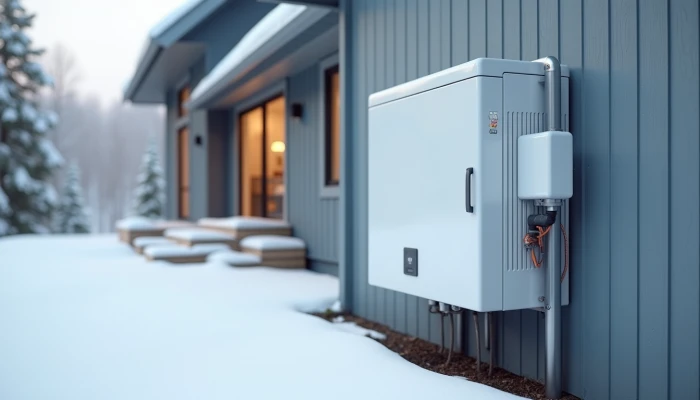
Getting Your Home Battery Ready for Winter
A home battery backup system can make outages easier to manage, but winter adds a layer of stress that many homeowners do not think about until the first hard freeze. Cold weather can reduce available power, slow charging, and in some cases create conditions that are hard on battery chemistry.
The good news is that cold-weather preparation is usually more about planning than major changes. You do not need to become an engineer to make sensible decisions. What matters most is understanding your battery's temperature limits, protecting it from prolonged cold exposure, and making sure charging controls are set up to prevent damage.
This guide focuses on practical, manufacturer-backed steps you can discuss with your installer or service provider. It does not cover electrical installation work. Instead, it will help you ask better questions, spot common winter risks, and prepare your system for more dependable backup power during cold weather.
Understanding Temperature Limits for Home Batteries
Temperature limits matter because batteries do not behave the same way in winter as they do in mild weather. Even when a battery still works in the cold, it may deliver less usable energy, charge more slowly, or temporarily restrict charging to protect itself.
A simple way to think about it is this: there is a difference between a battery being able to operate, discharge, and charge at a certain temperature. Many lithium-based systems can discharge in colder conditions than they can safely charge. That distinction is important during winter outages, especially if your system is paired with solar and may try to recharge on a freezing morning.
Across many manufacturer and battery guidance sources, lithium batteries tend to perform best in a moderate range, often around 32°F to 80°F (0°C to 27°C) for strong performance and long-term health. Some systems can tolerate colder discharge temperatures, but that does not automatically mean they should be charged at those same temperatures.
A conservative cold-weather rule is to verify these three numbers in your battery documentation:
- Minimum discharge temperature
- Minimum charge temperature
- Recommended operating temperature for normal performance
If your documentation is unclear, ask your installer or manufacturer support to explain the difference in plain language.
This quick reference can help frame what to look for.
| Temperature range | What it often means |
|---|---|
| Above 32°F (0°C) | Usually a safer zone for normal charging on many lithium systems, subject to manufacturer specs |
| 0°F to 32°F (-18°C to 0°C) | Battery may still operate, but charging may be limited, slowed, or blocked |
| Below -4°F (-20°C) | Extended exposure may create serious performance and durability concerns unless the system is specifically designed for it |
Some lithium iron phosphate battery systems include cold-weather protections or self-heating features. A few are designed for lower-temperature use than standard systems. Still, do not assume that all LFP battery models behave the same way. The safe range depends on the exact battery, battery management system, and charger controls.
This is also where backup planning connects to sizing. If winter reduces available performance, a system that felt adequate in mild weather may feel tighter during an outage. That does not mean you need to jump straight to whole home battery backup. It means you should review your critical loads and ask whether your battery still covers the essentials in cold conditions.
For many households, that starts with a short list such as:
- Refrigerator or freezer
- Furnace controls or blower
- Sump pump
- Well pump
- Internet and phone charging
- A few lights
If you have ever asked, "how much battery backup do I need," winter is a good reason to revisit the answer. A home battery size calculator can help estimate loads, but temperature limits and real-world charging conditions still need to be checked against the manufacturer's guidance.
Insulation and Environmental Protection Strategies
Once you know your battery's temperature limits, the next step is reducing how often the system approaches them. In cold climates, the goal is not to wrap equipment blindly. The goal is to keep the battery in a more stable environment and avoid long periods of deep cold.
The most reliable option is usually an indoor or climate-moderated location that stays within the manufacturer's operating range. Guidance from battery makers commonly emphasizes protected spaces over exposure to unheated outdoor conditions.
In practical terms, these locations are usually more favorable:
- Insulated utility rooms
- Conditioned basements that stay above freezing
- Attached spaces with moderated temperatures
- Purpose-built enclosures designed for the battery system
These locations are usually less favorable unless the manufacturer specifically approves them:
- Unheated detached garages
- Outdoor walls with full wind exposure
- Sheds without insulation or temperature control
- Crawl spaces with damp or freezing conditions
If your battery is already installed in a colder area, ask your installer what environmental protections are approved for that model. Depending on the system, that may include insulated cabinetry, enclosure upgrades, or manufacturer-approved thermal protection around the enclosure.
A useful winter check is to look beyond temperature alone. Moisture, drafts, and snow exposure can also create problems for electronics and battery support equipment. Even if the battery cells are protected, surrounding components may still be affected by harsh conditions.
Use this checklist before winter starts.
- Confirm the battery's approved installation environment in the product documentation.
- Check whether the space stays above the battery's minimum charging temperature.
- Look for cold air leaks, drafts, or direct wind exposure near the enclosure.
- Make sure vents and clearances remain as specified by the manufacturer.
- Inspect for moisture, condensation, or signs of water intrusion.
- Remove stored items that block airflow or service access.
- Ask whether the system includes built-in heating or temperature management.
One common mistake is assuming that any insulation helps. Too much unapproved wrapping can interfere with ventilation, service access, or safety clearances. Another mistake is assuming a basement is automatically warm enough. Some basements remain cold enough to affect charging, especially near exterior walls.
If your system supports only critical load backup, think through what winter loads matter most. For example, battery backup for refrigerator use may be more manageable than trying to support large electric heating loads. The same goes for pumps and blowers. A smaller, well-protected system that covers essential circuits can be more practical than expecting one battery to carry every load during a cold-weather outage.
The key idea is simple: protect the environment around the battery, not just the battery itself. Stable temperatures usually matter more than short bursts of cold.
Optimizing Charge Controller Settings in Cold Weather
Cold-weather charging is where many battery risks become more serious. A battery may still have enough energy to run loads in freezing conditions, but charging it when the cells are too cold can damage the battery. That is why charge controller and battery management settings matter so much in winter.
The main issue often discussed in manufacturer guidance is lithium plating. In simple terms, charging a lithium battery when it is too cold can cause unwanted metal deposits inside the cell. That can reduce life and, in some cases, create permanent damage. For many lithium systems, charging below 32°F (0°C) is restricted unless the battery is specifically designed and certified for it.
This does not mean homeowners should start changing advanced settings on their own. It means you should verify that the system is configured correctly for winter and that temperature-based protections are active.
Ask your installer or service provider to confirm these items:
- Low-temperature charging cutoff is enabled if the battery requires it.
- Temperature sensors are installed and reading correctly.
- The charger or inverter uses manufacturer-approved cold-weather settings.
- Any self-heating function is enabled and working as intended.
- Solar charging behavior in freezing weather has been reviewed.
If your system includes solar plus battery storage, this matters even more. On a bright but very cold morning, solar production may be available before the battery is warm enough to accept a charge. A properly configured system should manage that situation automatically, but it is worth confirming before winter arrives.
Here is a simple way to think about the charging sequence in cold weather.
- The battery temperature is measured.
- The system checks whether charging is allowed at that temperature.
- If the battery is too cold, charging is reduced, delayed, or blocked.
- If the system has a heating function, it may warm the battery first.
- Normal charging resumes only when the battery reaches an approved temperature range.
Smart chargers and battery management systems can make this process easier, but only if they are matched to the battery and configured correctly. If you are comparing backup power for home options, this is one of the less visible differences between systems. It is also one reason a portable unit and a permanently installed home battery system are not always interchangeable.
A few winter warning signs are worth watching for:
- The battery shows normal state of charge but charges very slowly in the cold.
- The system frequently pauses charging on freezing mornings.
- Error messages mention temperature, charging limits, or protection mode.
- Backup duration feels shorter than expected during winter outages.
Those signs do not automatically mean something is wrong. They may simply mean the system is protecting itself. But they are a good reason to review logs, settings, and manufacturer guidance with a qualified professional.
If your winter planning includes critical appliances, review them with realistic expectations. Battery backup for refrigerator loads is often easier to support than resistance heating, electric water heating, or whole-house electric cooking. The more accurately your critical load list matches your actual winter needs, the less likely you are to be surprised during an outage.
Conclusion
Cold weather does not automatically make a home battery backup system unreliable, but it does make preparation more important. The biggest winter priorities are knowing the battery's approved temperature range, keeping the system in a stable environment, and making sure charging protections are set correctly.
If you remember only a few points, keep these in mind:
- Check the manufacturer's minimum charging and discharge temperatures.
- Avoid assuming that a battery can charge safely just because it can still power loads.
- Use insulated or climate-moderated spaces whenever possible.
- Confirm that low-temperature cutoff and temperature monitoring features are active.
A well-prepared system is usually about matching expectations to real conditions. That may mean focusing on critical load backup instead of assuming the battery will run everything in a winter outage.
Because every battery model, inverter, and installation environment is different, it is wise to confirm winter settings and placement details with the manufacturer, installer, or a qualified electrician. That extra check can help protect battery life and improve your home's energy resilience when cold weather arrives.