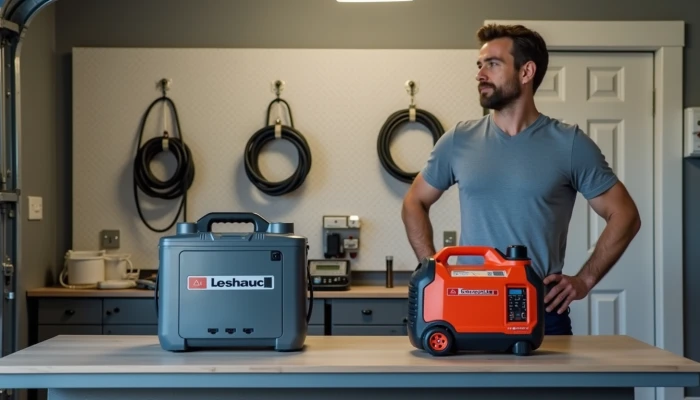
Battery Backup or Generator? How to Choose for Real-World Outages
Choosing between a home battery backup system and a generator can feel harder than it should. Both can keep essential devices running during an outage, but they solve different problems in different ways.
For many homeowners, the real question is not which option is universally better. It is which one fits your outage pattern, budget, maintenance tolerance, and power needs.
A battery system is quiet, automatic, and low-maintenance. A generator can often run longer as long as fuel is available. But those broad differences do not tell you enough to make a confident decision.
This guide compares the tradeoffs in plain language, with a focus on upfront costs, fuel vs. electricity expenses, maintenance requirements, and long-term value. It also explains why your answer may depend on whether you want to back up a few critical loads, such as a refrigerator or sump pump, or much more of the home.
Upfront Costs and Installation Requirements
In many homes, a battery backup system starts with a higher upfront price than a generator. The battery itself is only part of the cost. You may also need an inverter, control equipment, electrical work, and sometimes a critical loads panel if you only want to back up selected circuits.
Generator costs vary too. A portable generator may cost less upfront, but a permanently installed standby generator can add significant installation expense. Fuel setup matters here. A propane unit may need a tank. A natural gas unit may need a gas line assessment or upgrades. Electrical connection equipment is also part of the project.
For either option, hardwired backup usually means professional installation. That can include a transfer switch, service upgrades, or a sub-panel for essential circuits. Practical guidance from installers commonly notes that critical-load battery setups often require moving selected circuits into a smaller backup panel.
A simple way to compare the setup differences is this table.
| Factor | Home battery backup | Generator |
|---|---|---|
| Main equipment cost | Often higher upfront | Often lower for portable units, variable for standby units |
| Electrical work | Usually required for hardwired systems | Usually required for standby systems |
| Fuel infrastructure | Not needed for the battery itself | May need gas line, propane tank, or fuel storage |
| Indoor/outdoor placement | Battery equipment is often wall-mounted or garage/utility-space installed, subject to code and manufacturer rules | Engine-driven units are typically installed outdoors with clearance requirements |
| Backup style | Often designed around critical loads or selected whole-home setups | Can support broader loads if sized and fueled correctly |
If you are comparing quotes, ask each installer to separate these line items.
- Equipment
- Electrical labor
- Transfer switch or backup sub-panel
- Fuel-related work, if any
- Permits and inspections
That makes it easier to compare a home battery system and a generator on equal terms instead of just looking at one total price.
Ongoing Expenses: Fuel vs. Electricity
The biggest long-term difference is simple: generators consume fuel during operation, while batteries store electricity.
With a generator, your operating cost depends on fuel type, local prices, and how often outages happen. Natural gas, propane, and diesel all create different cost patterns. Even if the generator is rarely used, you may still have fuel-related readiness costs, such as keeping propane available or making sure a fuel supply is not stale or interrupted.
With a battery, there is no combustion fuel to buy during an outage. You charge it from the grid, from solar if you have it, or both. That does not mean the electricity is free. It means your backup power cost is tied to charging patterns and local electric rates instead of fuel deliveries.
In some homes, batteries can also be used outside outages to shift energy use away from expensive time-of-use periods. But whether that saves meaningful money depends on your utility rate design, your usage pattern, and whether the battery is large enough to do both daily shifting and outage backup.
For a practical 10-year comparison, think in categories rather than promises.
| Cost category over 10 years | Home battery backup | Generator |
|---|---|---|
| Upfront equipment and installation | Usually higher | Usually lower to moderate, depending on type |
| Energy to operate | Electricity from grid or solar | Ongoing fuel purchases |
| Routine maintenance | Usually low | Usually ongoing |
| Outage-heavy years | More cycling may affect long-term wear | More fuel use and more service needs |
| Infrequent outage years | Low operating cost if mostly idle | Lower fuel use, but maintenance still matters |
If you are asking, "how much battery backup do I need," this cost question connects directly to sizing. A larger battery may cover more loads for longer, but it also raises the initial investment. A smaller system focused on essentials may be more realistic for many households.
That is why a home battery size calculator can be useful as a planning tool. The goal is not perfect precision. It is to estimate whether you are backing up a refrigerator and lights, or trying to support large loads that may push you toward a bigger battery system or a generator.
Maintenance and Reliability Considerations
Maintenance is one of the clearest differences between these options.
Battery systems are usually lower effort once installed. They may need software or firmware updates, occasional status checks, and normal monitoring, but they do not require oil changes or engine service. That lower-maintenance profile is one reason some homeowners prefer them for everyday energy resilience.
Generators need more hands-on care. Depending on type and usage, that can include oil changes, fuel management, test runs, filter replacement, and mechanical inspection. If maintenance is skipped, reliability can suffer at the exact moment you need backup power.
Reliability also depends on what kind of outage you are planning for. Batteries tend to respond quickly and quietly when the grid goes down. But they are limited by stored energy and inverter output. A battery backup for refrigerator loads may be straightforward, while a well pump, sump pump, or central HVAC system may require more attention to startup surge and continuous wattage.
Generators can keep running as long as fuel is available, which is a major advantage in long outages. But that advantage depends on fuel access and equipment condition. Severe weather can also complicate refueling or fuel delivery.
Here is a simple maintenance and reliability checklist.
- Check whether your critical loads include high-surge equipment like well pumps or sump pumps.
- Confirm the inverter or generator can handle startup surge, not just running watts.
- Review battery warranty terms, including years covered and end-of-warranty capacity terms.
- Ask how generator maintenance is scheduled and what happens if service is missed.
- Consider whether you want an automatic system with less routine upkeep.
Industry guidance often places battery lifespan in the roughly 10 to 15 year range, with many warranties around 10 years and capacity-retention terms that should be read carefully. Generators can also last many years, but their lifespan depends heavily on maintenance and operating conditions.
In short, batteries usually ask for less routine attention, while generators usually ask for more upkeep in exchange for potentially longer runtime.
Environmental and Long-Term Value Factors
For some households, the decision is not only about outage protection. It is also about noise, emissions, and how the system fits into everyday life.
A battery system runs silently and does not produce on-site exhaust during use. If paired with solar, it can store solar energy for later use and provide backup without fuel combustion. That can be appealing if you want quieter operation or want backup power that feels more integrated with normal household energy use.
Generators are louder and produce emissions while running. That does not automatically make them the wrong choice. In places with long but rare outages, a generator may still be the more practical tool, especially if your priority is extended runtime over day-to-day convenience.
Long-term value is also broader than utility bill math. A battery may provide benefits during non-outage periods if your rate plan supports load shifting. It may also appeal to buyers who value quieter backup and home energy resilience. But those benefits vary by market and should not be treated as resale gains.
This is a good place to compare priorities directly.
| Priority | Battery may fit better if... | Generator may fit better if... |
|---|---|---|
| Noise | You want quiet operation | Noise is acceptable during outages |
| Emissions | You prefer no on-site exhaust during use | Emissions are a secondary concern |
| Daily usefulness | You may use stored power beyond outages | You mainly want emergency-only backup |
| Long outage coverage | You can manage loads carefully or recharge with solar | You want longer runtime with fuel supply |
| Maintenance tolerance | You want less routine upkeep | You are comfortable with regular service |
Some battery chemistries, including LFP battery systems, are often discussed for long cycle life and repeated outage use. But chemistry is only one part of the decision. The full system design, warranty, and installer support matter just as much.
Choosing the Right Option for Your Needs
The best choice usually becomes clearer when you stop thinking in product categories and start thinking in household needs.
First, look at your outage pattern. Short, repeated outages often favor batteries because they switch on quickly, run quietly, and do not require fuel handling. Longer outages may favor generators, especially if you need power for multiple days and have a dependable fuel plan.
Second, list your critical loads. Many households do not need to back up everything. They need refrigeration, some lighting, internet, phone charging, maybe a garage door, and possibly a well pump, sump pump, or heating equipment. That is very different from trying to run the entire home as usual.
Third, think about comfort with tradeoffs.
- If you want low maintenance and quiet operation, a battery may be more appealing.
- If you want extended runtime and can manage fuel and service, a generator may be more practical.
- If you only need a few essentials, a smaller critical-load battery setup may be enough.
- If your loads are large and outages are long, generator backup may be easier to size around.
A simple decision framework can help.
- Write down the devices you truly need during an outage.
- Estimate how long you need them to run.
- Flag any high-surge loads like pumps or large motors.
- Decide whether noise, fuel storage, and maintenance are acceptable.
- Get quotes for both approaches using the same backup goal.
If you are comparing a battery backup for refrigerator use versus whole-home backup, be careful not to mix those two goals. A system that handles a refrigerator, lights, and internet may be very different from one intended to support central air, electric cooking, or multiple large appliances.
This is also where professional guidance matters. A licensed electrician or qualified installer can confirm whether your panel, selected loads, and outage goals point more naturally toward a battery, a generator, or a limited critical-load setup instead of full-home backup.
Conclusion
Home battery backup and generators both have a place in residential outage planning. The better option depends on what you need powered, how long outages usually last, how much maintenance you are willing to take on, and whether quiet, fuel-free operation matters to you.
Batteries usually offer simpler operation, lower routine maintenance, and a better fit for short or frequent outages. Generators usually offer longer runtime if fuel is available and the system is maintained properly.
Before you decide, compare both options against the same list of critical loads and the same outage scenario. Then verify sizing, installation requirements, permits, and safety details with licensed electricians, installers, manufacturers, and your utility where relevant. That extra step can prevent an expensive mismatch between what a system sounds like it can do and what it can actually support in your home.