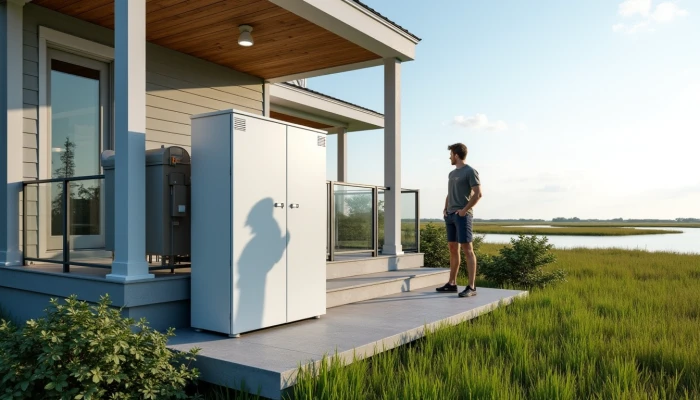
How to Keep a Home Battery System Healthy Near Salt Air and Humidity
Coastal homes have a different maintenance problem than inland homes. Even when a battery system is installed correctly, humid air, condensation, and airborne salt can slowly wear down exposed metal parts, enclosures, and sensitive electronics.
That does not mean a home battery backup system is a poor fit near the coast. It means the system needs environment-specific care. In practical terms, that usually comes down to controlling moisture, improving airflow, choosing corrosion-resistant materials, and inspecting the system more often than you might in a dry climate.
The goal is not to turn homeowners into installers or repair technicians. It is to help you spot the conditions that shorten battery life, ask better questions, and follow a maintenance routine that supports reliable backup power without getting lost in technical jargon.
Understanding Humidity Risks for Battery Systems
Humidity affects battery systems in more than one way. The most obvious issue is corrosion. When relative humidity stays high, metal terminals, fasteners, and exposed connection points are more likely to corrode. In coastal areas, salt in the air can speed that process up because it makes moisture more conductive and more damaging over time.
The second issue is moisture intrusion. Even if the battery cells themselves are sealed, the system still includes wiring, sensors, connectors, and battery management electronics. Guidance from battery and power equipment manufacturers commonly warns that moisture can damage external terminals and may interfere with battery management system components if condensation or damp air reaches sensitive areas.
A third issue is that humidity often comes with heat. Warm, damp spaces such as garages, utility closets, and outdoor cabinets in direct sun can trap both moisture and temperature swings. That combination can stress enclosures and internal electronics.
A simple way to think about the risk is this:
| Coastal condition | Why it matters |
|---|---|
| High relative humidity | Raises the chance of corrosion and condensation |
| Salt air | Speeds up metal deterioration and surface buildup |
| Poor airflow | Traps heat and moisture around the system |
| Temperature swings | Can create condensation inside or around enclosures |
If your battery sits in a space that feels damp, gets stuffy, or shows rust on nearby hardware, that is a sign to review the installation environment. It can also affect other backup planning decisions, including how much battery backup do I need, because a poorly protected system may not perform as expected during an outage.
Storage Best Practices for Coastal Climates
If a battery is not being actively used, or if part of your setup includes a portable unit kept for outages, storage conditions matter. Common manufacturer-style guidance for lithium batteries emphasizes moderate humidity, moderate charge levels, and protection from condensation.
For long-term storage, a middle charge level is usually preferred over storing the battery completely full or empty. Several practical guidance sources also point to keeping storage humidity in a moderate range rather than allowing the battery to sit in a damp shed, unconditioned porch closet, or sealed box that traps moisture.
Use these storage habits as a conservative baseline:
- Keep the storage area dry and stable rather than hot, damp, or exposed to outdoor air.
- Aim for moderate relative humidity, commonly around the 40% to 60% range when manufacturer guidance supports it.
- For long-term storage, keep the battery at a partial state of charge rather than fully charged or fully depleted.
- Avoid spaces where condensation forms, such as areas near uninsulated exterior walls or coastal garages with frequent temperature swings.
- If a portable unit is stored in an enclosed case or cabinet, use moisture-control measures such as desiccants if the manufacturer allows them.
For homeowners, the key distinction is between sealed and stagnant. A battery should be protected from direct damp air, but that does not mean trapping it in a wet enclosure with no airflow. A dry, sheltered, ventilated location is usually better than a tightly closed space that collects moisture.
If you are comparing backup options, this is also one reason a portable power station for home use may need different care than a permanently installed battery cabinet. Both can suffer from humidity, but the right storage routine depends on whether the unit is moved, stored seasonally, or hardwired as part of a larger backup system.
Ventilation and Enclosure Requirements
Ventilation matters because batteries and inverters do not like trapped heat or trapped moisture. In coastal environments, poor airflow can create a pocket of warm, damp air inside an enclosure or utility space. Over time, that can increase corrosion risk and raise the chance of condensation on cooler surfaces.
The right setup depends on the equipment design, so homeowners should follow manufacturer placement rules and confirm site conditions with a qualified installer. Still, a few general principles are widely consistent.
Use this checklist when reviewing a battery location:
- The enclosure or room should allow proper airflow rather than sealing moisture inside.
- The system should not sit in direct sunlight if that creates heat buildup beyond the equipment's intended operating conditions.
- Avoid spots where humid air regularly condenses, such as near uninsulated metal doors, leaky walls, or poorly vented outbuildings.
- Outdoor or semi-outdoor installations should use enclosures intended for that environment.
- In coastal settings, ask whether the enclosure materials and ventilation design are suitable for corrosive air exposure.
Marine or corrosion-resistant enclosure materials can help, but enclosure design matters too. Vents, seals, and airflow paths should work together so the system can shed heat without inviting moisture to collect inside.
This is not a DIY installation issue. If you are planning a new home battery backup setup, ask the installer to explain how the chosen location handles both heat and humidity, not just one or the other. That question is especially important for homes that also want critical load backup for essentials like a refrigerator, freezer, or internet equipment during outages.
Corrosion-Resistant Material Selection
Material choice can make a noticeable difference near the coast. Salt air is hard on ordinary steel hardware, exposed terminals, and thin coatings that break down over time. If the battery system includes outdoor mounting, wall brackets, fasteners, conduit fittings, or enclosure hardware, corrosion resistance should be part of the conversation from the start.
In general, homeowners should look for or ask about:
- Stainless steel or aluminum hardware where appropriate for the application
- Sealed or well-protected terminals and connection points
- Enclosures designed to resist corrosion in harsh environments
- Protective coatings on vulnerable electrical connections when approved by the manufacturer
- Weather and ingress ratings that match the installation location
Be careful not to treat a rating or material label as a blanket promise. For example, a sealed casing or a high ingress-protection rating may help with dust and water resistance, but it does not automatically mean every exposed external part is equally protected from salt air. The full system matters, including mounting hardware, cable entry points, and nearby metal components.
This is also a good time to ask practical quote-review questions:
- What parts of this installation are most exposed to salt air?
- Which hardware and enclosure materials are being used?
- How should those materials be maintained in a coastal climate?
- Are there any cleaning or inspection steps required to preserve warranty coverage?
Those questions are often more useful than focusing only on battery chemistry terms like LFP battery or lithium iron phosphate battery. Chemistry matters, but the surrounding installation details often determine how well the system holds up in a humid coastal setting.
Monitoring and Maintenance Schedules
Coastal battery systems benefit from a more regular inspection routine. The goal is not constant tinkering. It is catching small problems early, before corrosion spreads or moisture damage becomes expensive.
A practical schedule can look like this:
| Task | Suggested rhythm | What to look for |
|---|---|---|
| Visual terminal and hardware check | Monthly | Corrosion, discoloration, rust, white or green residue |
| Enclosure exterior cleaning | Quarterly | Salt film, dirt buildup, blocked vents |
| Vent and airflow review | Quarterly | Obstructions, insect nests, signs of trapped moisture |
| Full system health review | Annually | Battery status, alerts, manufacturer-recommended diagnostics |
During routine checks, look for warning signs such as rust on nearby fasteners, chalky buildup on terminals, musty smells in the enclosure area, water staining, or recurring app alerts from the system. If you see corrosion or moisture intrusion, stop short of improvised repair work and contact the installer or manufacturer support path.
A few maintenance habits are especially useful near the coast:
- Wipe down the outside of accessible enclosures to remove salt residue.
- Keep vents and surrounding areas clear so airflow is not blocked.
- Review monitoring apps or status indicators for recurring temperature, communication, or fault warnings.
- Recheck the area after storms, wind-driven rain, or seasonal humidity spikes.
If your backup plan depends on a battery backup for refrigerator loads, internet gear, lights, or a well pump, this routine becomes more than cosmetic. It supports reliability when the power is actually out.
For sizing and planning, maintenance should also be part of the bigger picture. A home battery size calculator can help estimate capacity needs, but capacity alone does not guarantee dependable performance. A right-sized system in a poor environment can still become a headache, while a modest system in a well-managed space may stay more dependable over time.
Conclusion
Humidity and salt air do not automatically rule out battery backup near the coast, but they do raise the maintenance standard. The most useful habits are straightforward: keep the system in a dry, well-ventilated location, avoid condensation-prone spaces, use corrosion-resistant materials where possible, and inspect the setup on a regular schedule.
The main takeaway is simple. Coastal conditions reward proactive care. If you already have a system, review the enclosure, airflow, and inspection routine. If you are still shopping, ask installers how the design addresses humidity, salt exposure, and maintenance requirements over time.
For anything involving placement rules, enclosure changes, wiring, fault messages, or corrosion on electrical parts, verify the next step with the manufacturer, installer, or a qualified electrician. That conservative approach helps protect both battery performance and household safety.