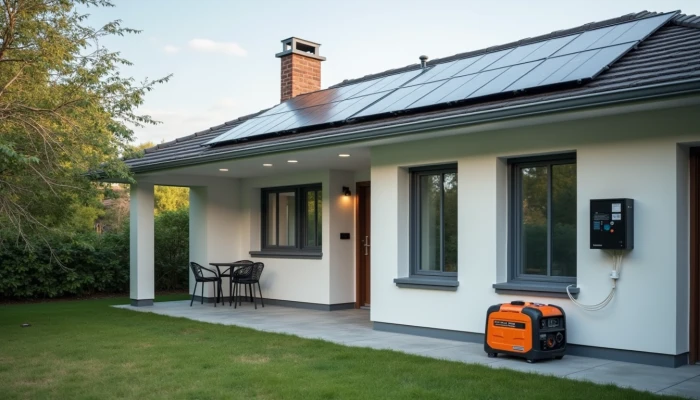
When Solar Keeps Working in a Blackout—and When It Doesn’t
A lot of homeowners assume solar panels will keep the lights on during a power outage. In many homes, that is not how it works.
Most standard grid-tied solar systems shut down when the grid goes down unless they are paired with the right backup equipment. That shutdown is a safety feature, not a flaw. To use solar power during an outage, your system usually needs a battery, an inverter that supports backup operation, and a way to isolate your home from the grid.
The good news is that a well-planned setup can make outages much easier to manage. A home battery backup system can store solar energy for later use, power selected circuits automatically, and in some cases work alongside a generator for longer events. The key is understanding what your system can actually do, what it will power, and where the limits are.
This guide explains the basics in plain language so you can ask better questions, compare options more confidently, and prepare for outages without getting lost in technical jargon.
How Solar Panels and Battery Systems Work Together During Outages
Solar panels make electricity when the sun is available, but that does not automatically mean your home can use that power during a blackout. In a typical grid-tied setup, the solar system shuts off during an outage unless it includes backup-capable equipment.
A battery changes that. During normal operation, solar energy can charge the battery and support household use. When the grid fails, a backup-ready system can disconnect from the utility and switch to stored battery power. If sunlight is available, the solar panels may continue recharging the battery and supporting approved household loads.
The main pieces usually work like this:
- Solar panels generate electricity during daylight.
- Battery storage holds energy for later use.
- An inverter converts battery and solar power into usable household electricity.
- Backup controls or a smart panel decide which circuits receive power and when the system should switch modes.
Many systems are designed to detect an outage automatically. That means the changeover from grid power to battery power can happen without the homeowner doing anything manually. The exact behavior depends on the equipment and how the system was configured.
It also helps to understand that backup power is often selective. Some homes are set up for critical load backup, which means only essential circuits stay on. Others are designed for broader coverage, but even whole-home battery backup still has limits based on battery capacity, inverter output, and how many appliances are running at once.
If you are evaluating a system, ask these practical questions:
- Will the solar array continue charging the battery during an outage?
- Does the inverter support backup operation?
- Is the system set up for critical loads only or broader home coverage?
- How quickly does the system switch when the grid goes down?
- Are there appliance startup limits for motors, pumps, or HVAC equipment?
Those details matter more than the simple label of "solar with battery."
Integrating Solar, Battery Backup, and Generators for Multi-Source Reliability
For short outages, solar plus battery may be enough. For longer outages, especially during storms, smoke, heavy cloud cover, or winter conditions, some households want another layer of backup. That is where generator integration can make sense.
A multi-source setup combines solar panels, battery storage, and a generator so the home can draw from more than one backup source. In general, the system is configured to use quieter and lower-maintenance sources first, then bring in the generator when battery reserves drop or solar production is not enough.
A common priority order looks like this:
- Use available solar production.
- Use stored battery energy.
- Start or switch to generator support if battery levels fall or loads exceed what the battery can handle.
This kind of coordination depends on controls such as an automatic transfer switch, backup gateway, or smart home panel. These controls help the system detect outages, isolate from the grid, and manage source switching safely. In practical terms, that means the system can often autodetect when utility power is lost and respond without the homeowner running outside or flipping multiple switches.
That said, integration is not just about convenience. It is also about protecting equipment. If source switching is poorly coordinated, power surges, delays, or mismatched operating conditions can stress appliances and battery components. That is one reason manufacturers and safety guidance typically emphasize approved pairings and professional configuration.
This comparison can help clarify where each backup source fits.
| Backup source | What it does well | Main limitation during outages |
|---|---|---|
| Solar panels | Recharges batteries during daylight | Output changes with weather and time of day |
| Battery system | Provides instant stored power with no fuel handling | Runtime is limited by battery size and household loads |
| Generator | Extends backup during long outages | Needs fuel, maintenance, and proper integration |
Portable power stations can also fit into this picture, but usually for smaller needs such as phones, routers, lights, laptops, and a few compact appliances. They can be useful for renters or as a secondary backup layer, but they are not a full substitute for a professionally installed home battery system when the goal is hardwired backup across multiple home circuits.
If you want solar, batteries, and a generator to work together, confirm compatibility with the manufacturer and installer before buying. Not every battery system supports every generator, and not every home layout supports the same backup strategy.
Safety Considerations for Solar and Battery Systems During Outages
Outage planning should make your home safer and more resilient, not introduce new risks. That starts with using equipment as intended and avoiding workarounds.
The first safety point is simple: follow manufacturer guidance for how solar, batteries, inverters, and generators are meant to work together. Backup systems are designed around specific electrical limits, communication methods, and switching behavior. Mixing components without confirmed compatibility can create performance problems or electrical hazards.
The second point is installation quality. Hardwired home battery backup systems should be installed and configured by qualified professionals. This is important for code compliance, utility interconnection rules, proper isolation from the grid, and safe operation during outages.
Look for safety certifications that match the type of equipment involved. For example, fixed home energy storage systems are commonly associated with standards such as UL 9540, while portable power packs may be evaluated under different standards. Certification does not mean a system is right for every home, but it is a useful baseline when comparing options.
Keep these outage safety rules in mind:
- Do not assume your existing solar array can power the home during a blackout without backup-capable equipment.
- Do not attempt DIY panel modifications, transfer switch work, or battery wiring.
- Do not use generators indoors or in attached spaces.
- Do not overload battery-backed circuits with large appliances the system was not designed to support.
- Do not rely on extension-cord workarounds as a substitute for a properly designed backup plan.
It is also worth asking your installer how the system handles these conditions:
- Utility outage detection
- Automatic isolation from the grid
- Battery charging limits during an outage
- Generator coordination, if applicable
- Restart behavior when grid power returns
These are not small details. They affect both safety and real-world performance.
If your goal includes medical devices, well pumps, sump pumps, or other critical household equipment, verify the exact electrical requirements with a licensed electrician and the equipment manufacturer. Startup surges and circuit requirements can differ from the simple wattage numbers people see on labels.
Critical Loads and System Sizing for Outage Preparedness
A backup system works best when it is sized around what you actually need, not what sounds reassuring in a sales conversation. That starts with identifying your critical loads: the appliances and circuits you most want available during an outage.
For many households, that list includes some combination of:
- Refrigerator or freezer
- Internet modem and Wi-Fi router
- Lights in key rooms
- Phone and device charging
- Sump pump
- Well pump
- Furnace controls or blower
- Garage door opener
- A few kitchen outlets
This is where questions like how much battery backup do I need become more useful than broad claims about powering an entire home. The answer depends on three things:
- Which loads matter most
- How long you want to cover them
- Whether solar can recharge the battery during the outage
A simple planning process can help.
- List the devices or circuits you want backed up.
- Note both running power and any higher startup demand for motors or pumps.
- Estimate how many hours per day each load may be needed during an outage.
- Separate must-have loads from nice-to-have loads.
- Use a home battery size calculator or installer estimate to compare battery capacity with expected use.
- Ask how much solar recharge you can realistically expect in your location and season.
Here is a simple decision framework you can use before talking with installers.
| Load type | Priority | Why it matters for sizing |
|---|---|---|
| Refrigerator/freezer | High | Often a core backup need; helps estimate battery backup for refrigerator use |
| Sump or well pump | High | May have high startup demand that affects inverter sizing |
| Internet and lights | to high | Usually low energy use, but important for comfort and communication |
| HVAC or electric cooking | Lower for many battery setups | Can use large amounts of power and shorten runtime quickly |
Solar recharge matters too. A battery that looks undersized on paper may work well if daytime solar can refill it during an outage. On the other hand, a large battery may still disappoint if the home tries to run too many heavy loads at once.
That is why many homes use a critical loads panel instead of backing up every circuit. It is a practical way to stretch battery runtime and avoid spending on capacity you may rarely use.
Before you commit, ask for a load-based estimate that shows:
- Which circuits will be backed up
- Expected runtime under typical outage use
- What happens during cloudy weather
- Whether large loads are excluded or limited
- How generator support changes the plan, if included
That kind of estimate is much more useful than a generic promise that the system will cover "most homes."
Conclusion
Using solar panels during a power outage is possible, but only when the system is designed for backup operation. In most homes, that means solar panels working with a battery, a compatible inverter, and controls that can isolate the home from the grid and switch power automatically.
For longer outages, adding generator support can improve reliability, but only if the equipment is meant to work together and is configured properly. The most practical approach is usually to focus on critical loads first, then size the system around realistic energy use and solar recharge expectations.
If you are comparing options, keep the conversation grounded in specifics:
- What will stay on during an outage
- How the system detects and responds to grid failure
- Whether solar can recharge the battery during blackout conditions
- How generator integration works, if included
- Which safety standards and installation requirements apply
A well-planned setup can improve home energy resilience without overpromising. Before buying, verify compatibility, load assumptions, permits, and safety details with the manufacturer, your utility where relevant, and a licensed installer or electrician.