What Humid Air Can Do to a Home Battery System
If you live near the coast, in a tropical climate, or in any area where indoor spaces stay damp for long stretches, humidity deserves a place on your home battery backup checklist. Moisture in the air can affect metal parts, electrical connections, and the enclosure around a battery system long before there is an obvious failure.
That does not mean every battery in a humid area is in trouble. It means the system needs the right environment, steady airflow, and routine checks. For most homeowners, the goal is simple: reduce moisture exposure, spot early warning signs, and confirm that the installation matches manufacturer guidance.
This guide explains what humidity can do to a home battery system, how to manage moisture without unsafe DIY electrical work, and when to bring in licensed help.
Understanding Humidity Risks for Home Batteries
Humidity matters because batteries are not just sealed boxes of stored energy. A home battery system includes terminals, wiring connections, electronics, and an enclosure. When damp air lingers around those parts, the risk is usually not dramatic overnight failure. It is gradual wear, corrosion, and moisture-related stress that can shorten useful service life or create maintenance issues.
Several battery storage references recommend keeping relative humidity below 60%, with some guidance pointing to a general 40% to 60% range as a reasonable target for storage and operation. The exact acceptable range depends on the battery maker, enclosure design, and installation location, so the manufacturer manual should always take priority.
The main humidity-related concerns include:
- Condensation: When warm, moist air meets a cooler surface, water can form on casings or nearby components.
- Corrosion: Battery terminals, fasteners, and metal enclosure parts can degrade over time when exposed to persistent moisture.
- Moisture ingress: If water vapor gets into vulnerable areas, it can affect electronics, insulation, or internal components.
- Heat plus humidity: Damp spaces with poor airflow can trap heat, and heat management is already important for battery health.
In practical terms, a battery installed in a dry utility room usually faces fewer moisture problems than one placed in a damp garage corner, enclosed shed, or poorly ventilated storage area. If you are comparing backup power for home options, humidity is one of the site conditions that should shape the installation plan, not an afterthought.
This is also a good reminder that battery sizing questions like how much battery backup do I need or using a home battery size calculator are only part of the decision. The room or enclosure conditions matter too. A correctly sized system still needs a suitable environment to operate as intended.
Moisture Control Strategies for Battery Enclosures
The best moisture-control approach depends on where the battery is installed and how the enclosure is designed. The goal is not to make broad promises about longevity. It is to reduce exposure to damp air and lower the odds of condensation and corrosion.
Start by thinking in layers. A good setup usually combines passive moisture control, better sealing, and active humidity management when needed.
Here are practical strategies that commonly help:
- Using silica gel packs: In sealed or semi-sealed enclosures, silica gel packs can help absorb small amounts of excess moisture. They are not a substitute for proper installation or ventilation, but they can support moisture control in the right enclosure.
- Dehumidification: Some installations benefit from a dehumidifier in the room or a humidity-control feature built into the enclosure. Moisture sensors can help track whether the space is staying within the intended range.
- Better sealing: Gaskets, weather-resistant enclosure materials, and properly sealed access points can reduce humid air intrusion.
- Water separation: Keep the system away from plumbing leaks, direct wind-driven rain, and floor areas that may collect water.
A simple way to think about enclosure choices is this table.
| Condition around the battery | Why it matters | Practical response |
|---|---|---|
| Damp enclosed space | Moisture can build up with nowhere to go | Improve ventilation and consider room dehumidification |
| Sealed cabinet with minor humidity swings | Trapped moisture may linger | Use silica gel packs if the manufacturer allows it and inspect regularly |
| Area exposed to splash, leaks, or wind-driven moisture | Raises corrosion and electrical risk | Relocate or upgrade enclosure protection through a qualified installer |
| Hot and humid corner with poor airflow | Heat and moisture can compound stress | Increase airflow and verify placement against manufacturer guidance |
One caution: moisture control should not block airflow that the battery system needs for cooling. A tightly sealed space that traps heat can create a different problem. That is why enclosure sealing and ventilation need to be planned together, not separately.
If you are also thinking about smaller backup options, the same principle applies to a portable power station or solar generator stored in a humid garage or shed. Even if the equipment is not hardwired, moisture control still matters.
Proper Installation Practices for Humid Climates
Installation choices often determine whether humidity stays manageable or becomes a recurring problem. This is where professional planning matters most.
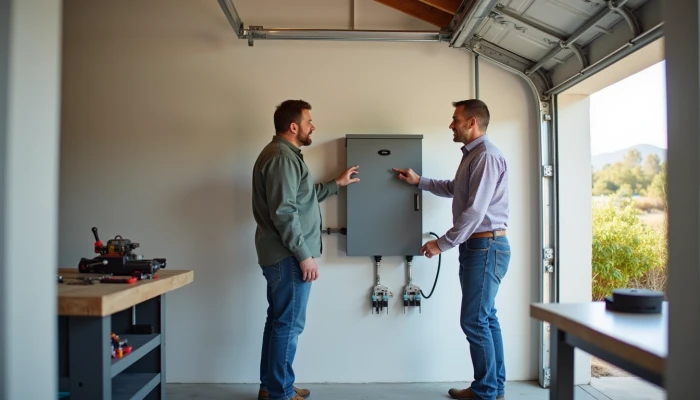
For a hardwired home battery backup system, consulting licensed electricians is the safest path. They can evaluate placement, airflow, clearances, and how the battery enclosure interacts with the rest of the electrical system. They can also coordinate with installer and manufacturer requirements, which may differ by model and location.
A few installation principles are especially important in humid climates:
- Choose a location with stable conditions. A conditioned utility space may be better than a damp outbuilding or an unventilated garage corner.
- Ensure proper ventilation. Adequate airflow helps reduce heat and moisture buildup around the system.
- Avoid chronically damp rooms. Basements, storage rooms, or closets with persistent condensation are poor candidates unless specifically designed for that use.
- Respect manufacturer clearances. Batteries need space around them for cooling and service access.
- Plan for drainage and water exposure. The battery should not sit where flooding, roof leaks, or runoff could reach it.
Use this quick checklist before approving an installation site.
- The area stays reasonably dry most of the year.
- Air can move around the battery enclosure.
- The space is not exposed to routine condensation.
- The location is not next to plumbing leak risks.
- Manufacturer temperature and humidity guidance has been reviewed.
- A licensed electrician or qualified installer has confirmed the placement.
This section is also where homeowners should avoid overgeneralizing from portable equipment. A portable unit used occasionally for a battery backup for refrigerator during outages is not the same as a permanently installed whole-home or critical-load battery system. Hardwired systems involve code, ventilation, and placement issues that should not be handled as DIY electrical work.
Monitoring and Maintenance for Humidity Management
Once the system is installed, humidity management becomes an ongoing maintenance habit. You do not need to overcomplicate it, but you do need to check conditions often enough to catch problems early.
A simple maintenance routine usually includes visual checks, humidity tracking, and a review of manufacturer guidance. If your battery app or installer portal reports environmental alerts, those notices should be taken seriously rather than ignored.
Focus on these routine checks:
- Look for condensation: Check the enclosure exterior, nearby walls, and visible metal parts for moisture beads or dampness.
- Watch for corrosion: Discoloration, rust, or white or greenish buildup around exposed metal parts can signal a moisture issue.
- Use a hygrometer: A basic humidity monitor near the battery area can help you see whether the space is routinely staying too damp.
- Review airflow: Make sure vents are not blocked by storage items, dust buildup, or changes in the room layout.
- Follow the manual: Manufacturer guidance for temperature and humidity ranges should guide your maintenance decisions.
A practical maintenance sequence can look like this.
- Check the room humidity during the most humid part of the week or season.
- Inspect the enclosure and surrounding area for condensation or corrosion.
- Confirm that vents, louvers, or airflow paths are unobstructed.
- Replace or refresh silica gel packs if they are part of the approved setup.
- Contact the installer or manufacturer support if humidity stays outside the recommended range.
If you notice repeated moisture problems, do not assume the battery itself is the only issue. The room may need better dehumidification, improved ventilation, or a different enclosure approach. In some homes, the battery area may simply be the wrong place for long-term operation.
This kind of monitoring is worth doing even if your main concern is outage readiness rather than daily energy savings. A battery that sits in a damp environment may not be in the best condition when you need it most.
Conclusion
Humidity control for a battery system is mostly about prevention. Keep the space dry, ensure proper ventilation, use simple moisture-control measures such as silica gel packs where appropriate, and avoid treating enclosure placement as a minor detail.
For homeowners in humid climates, the safest approach is to combine routine checks with professional oversight. Verify the acceptable humidity range in your battery documentation, and consult licensed electricians or qualified installers if the space is damp, poorly ventilated, or exposed to leaks or condensation.
No battery system is fully immune to moisture-related problems. But with the right environment and maintenance habits, you can reduce avoidable risk and make your backup setup more dependable.