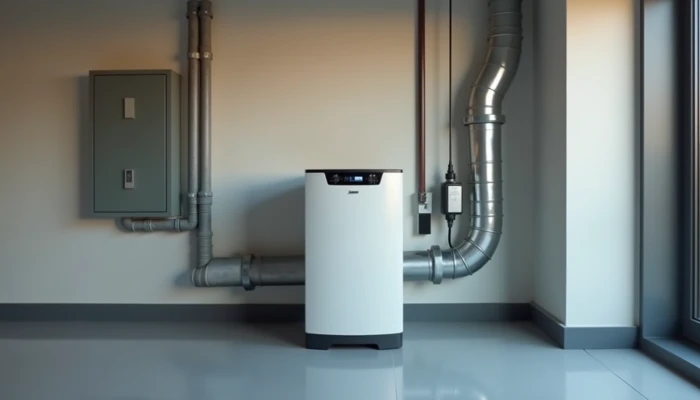
When a Home Battery Makes Sense Even Without Solar
A home battery backup system does not always need solar panels to be useful. In some homes, the battery is charged from the grid when electricity is cheaper, then used later for backup power or to reduce electricity use during higher-rate hours.
That idea sounds simple, but the real decision is not just "battery or no battery." It is whether a grid-charged system fits your outage risk, your utility rate structure, and the loads you actually need to support.
For many households, the main questions are practical:
- How does a grid-charged battery work day to day?
- Can it help during time-of-use electricity pricing?
- How much battery backup do I need for essential circuits?
- When does it make more sense to add solar instead of relying on grid charging alone?
This guide walks through those questions in plain language. It focuses on tradeoffs, not hype, and it avoids assuming that every battery should be sized for whole-home backup.
How Grid-Charged Battery Systems Work
A grid-charged battery system stores electricity from your utility, not from rooftop solar. In simple terms, the battery charges when power is available and, in some rate plans, less expensive. It then discharges later to run selected household loads.
In normal operation, many systems are set up around a daily cycle:
- Charge during lower-cost hours, often overnight.
- Hold that energy until rates rise or an outage occurs.
- Discharge to serve part of the home during expensive periods or interruptions.
This is often called time-of-use shifting or arbitrage. The concept is straightforward, but the value depends on your utility plan. If your rate does not vary much by time of day, the financial case may be weaker even if the backup value is still important.
A battery system also needs a way to decide what it will power. That is where load planning matters. Many backup setups use a critical loads panel, which is a smaller electrical panel that serves only essential circuits. Instead of trying to run everything, it prioritizes the loads you care about most during an outage.
Typical critical loads may include:
- Refrigerator or freezer
- Internet equipment
- A few lighting circuits
- Sump pump
- Well pump
- Garage door opener
- Selected outlets for charging phones or medical-adjacent household needs
Some systems can support broader backup, but that should never be assumed. Large loads such as central air conditioning, electric resistance heat, electric water heating, or multiple cooking appliances can drain a battery quickly unless the system is specifically designed for them.
Another important piece is the inverter and control software. The inverter converts stored battery power into usable household power, while the controls decide when to charge and discharge. In some setups, software can respond to utility pricing schedules automatically. In others, the installer configures operating modes based on your goals, such as backup reserve, bill management, or a blend of both.
A few households may also encounter virtual power plant programs, where connected batteries can be coordinated to support the grid. That can change how the battery is used, so it is worth reading program terms carefully before enrolling.
The key takeaway is that a grid-charged home battery backup system is not just a box on the wall. It is a combination of storage, power conversion, controls, and load selection. The better those pieces match your home, the more useful the system will be.
Cost Comparison: Grid-Charged vs. Solar-Plus-Storage Systems
Grid-charged battery systems usually cost less upfront than solar-plus-storage because they do not include solar panels, racking, and related solar equipment. But lower upfront cost does not automatically mean better value.
The main difference is where the stored energy comes from.
| Option | Where charging energy comes from | Main value | Main limitation |
|---|---|---|---|
| Grid-charged battery | Utility electricity | Backup power and possible time-of-use bill management | Still depends on buying electricity from the grid |
| Solar-plus-storage | Solar first, grid as needed depending on setup | Backup power plus self-generated energy | Higher upfront cost and more site-specific design factors |
With a grid-charged system, the financial logic usually depends on three things:
- Your utility's time-of-use electricity pricing
- The difference between low-rate and high-rate periods
- System losses from charging, storing, and discharging energy
Those losses matter because a battery is not perfectly efficient. Some energy is lost in conversion and storage. That means you are not simply buying one unit of cheap electricity and using that exact same unit later. If the rate gap is small, those losses can reduce or erase the bill-saving benefit.
This is why two homes with the same battery may see very different results. One may have steep peak pricing and frequent outages, making the battery easier to justify. Another may have flat rates and rare outages, making the battery more of a resilience purchase than a savings tool.
A simple way to think about the comparison is this:
- Grid-charged battery: usually easier to understand as a backup and rate-management tool
- Solar-plus-storage: broader energy strategy that may reduce grid purchases more directly, but with more moving parts and higher entry cost
That does not mean solar is always the better financial choice. Some homes are not good solar candidates because of roof condition, shading, ownership constraints, or timing. Others may want backup now and prefer to evaluate solar later.
Before assuming a battery will save money, review these questions.
- Does your utility offer a real time-of-use rate with a meaningful price spread?
- Are grid charging and battery export rules allowed under your tariff and utility program?
- Will you use the battery often enough for rate shifting, not just rare outages?
- Are you sizing the system for essential loads rather than an unrealistic whole-home expectation?
If your main goal is backup power, the battery may still make sense even if the bill savings are modest. If your main goal is lowering electricity costs, the details of the rate plan matter much more.
In short, a grid-charged battery can be financially reasonable in the right setting, but it is not a universal shortcut around solar. It works best when the rate structure, battery controls, and household usage pattern line up.
Load Management Strategies for Grid-Charged Systems
Load management is what turns a battery from a general idea into a practical plan. Without it, homeowners often overestimate what a battery can run and for how long.
The first step is deciding what must stay on during an outage or expensive rate period. This is the core of critical load backup. Instead of asking, "Can this run my whole house?" ask, "Which circuits matter most, and for how many hours?"
A simple sizing approach looks like this:
- List essential loads.
- Estimate each load's wattage and daily run time.
- Convert that into daily energy use in kilowatt-hours.
- Decide how many hours or days of backup you want.
- Account for usable battery capacity rather than nameplate capacity alone.
If you have searched for a home battery size calculator, this is the logic those tools usually follow. The exact numbers vary by appliance behavior, but the method is consistent: total the energy needed for your critical loads, then compare that to usable battery storage.
This checklist can help you narrow the list.
- Keep refrigeration on the list if food protection matters.
- Include pumps only if your home depends on them, such as a sump pump or well pump.
- Add communications gear like modem and router if staying connected matters during outages.
- Be careful with heating and cooling loads, which can be much larger than expected.
- Separate "nice to have" loads from true essentials.
A critical loads panel is often useful because it creates a clear boundary. Essential circuits are routed to the battery-backed portion of the home, while nonessential circuits stay outside that backup plan. This can make outage performance more predictable and help preserve stored energy.
Load management software can add another layer. Depending on the system, controls may prioritize battery reserve for outages, discharge only during peak-rate windows, or limit certain loads when battery state of charge drops. That is especially useful for homes trying to balance two goals at once: resilience and bill management.
Here is a practical framework for deciding how much battery backup you need.
| Question | Why it matters |
|---|---|
| What loads are truly essential? | Prevents oversizing around occasional or noncritical use |
| How long do outages usually last? | Helps set realistic backup duration goals |
| Do you want outage backup, rate shifting, or both? | Changes how much reserve you may want to keep in the battery |
| Are any loads motor-driven or high-surge? | Affects inverter and system capability, not just battery size |
| Can some loads be used one at a time? | Reduces peak demand and may allow a smaller system |
This is also where expectations need to stay realistic. A battery backup for refrigerator use is a very different sizing problem from a battery backup for furnace, well pump, or whole-home air conditioning. The more large or simultaneous loads you include, the larger and more expensive the system usually becomes.
One of the most effective strategies is simply staging your loads.
- Keep always-on essentials on battery-backed circuits.
- Delay discretionary loads until grid power returns or lower-rate hours begin.
- Avoid running multiple high-demand appliances at the same time during backup operation.
For many households, that approach delivers more value than trying to build for every possible scenario. It also makes it easier to compare installer proposals, because you can judge them against a clear list of priorities instead of a vague promise of "whole-home" support.
If you are unsure where to start, begin with your outage pain points. Food spoilage, water movement, connectivity, and basic lighting are often easier to plan for than trying to duplicate normal household energy use. That makes the system easier to size, easier to understand, and more likely to match your budget.
Conclusion
A grid-charged battery can be a practical backup power option even without solar, especially for households dealing with outages or time-of-use electricity pricing. But its value depends on matching the system to real needs, not assuming every battery should power an entire home.
The most important decisions are usually these:
- Which loads you want to protect
- How long you need backup to last
- Whether your utility rate structure supports meaningful load shifting
- Whether backup, bill management, or both are your main goal
For some homes, a grid-charged battery is a sensible first step. For others, solar-plus-storage may be the better long-term fit. Either way, careful load planning matters more than marketing language.
Before moving forward, verify utility rules, operating modes, and electrical requirements with qualified professionals. A licensed electrician, installer, manufacturer, or utility representative can help confirm whether a proposed setup matches your panel, your rate plan, and your backup priorities.